let us make light

a candle lighting kavanah in honor of shabbat of bereishit

As our week ends, we focus on how our own lives mirror cosmic events.

Shab­bat now begins.
We have com­plet­ed a full week of creation.

Now we focus inward for a short time;
of what has this week consisted?

We bring to consciousness aspects of our week just passed:

Was there a project left uncompleted,
the var­i­ous loose ends still dan­gling, becom­ing frayed and entangled?

Was there a dis­agree­ment with someone,
when I raised my voice and the noise of my words became jumbled?

Per­haps a deci­sion had to be made.
No choice was ful­ly ade­quate and I found myself in tur­moil, my feel­ings all churned up.

I can feel the unpleas­ant­ness irri­tate me; I squirm and sweat.
I feel the entan­gle­ment and fraying
I watch the words as they col­lide around my ears
I lis­ten as my feel­ings grind in my guts.

Before God began to cre­ate, every­thing was chaot­ic and unorganized.”

Search within for the stability of your breathing.

Lis­ten to the air flow deep into your body.
Feel your lungs expand and com­fort­ably contract.
Watch the con­stant exchange between you and the expanse around you.

Permit the unpleasantness to drift away as your awareness centers on the smooth regularity of your breath.

The breath of God sweeps over the depths of darkness.”

Near your breath there is a warmth you can encourage.

Slow­ly raise the warmth above your chest.

Lift the warmth into your head.

Con­cen­trate all of the warmth in a point at the cen­ter of your forehead.

Allow this warmth to glow, bright­en and fill your head.

And God said: ‘Let there be light.’”

Vela Supernova Remnant

let there be light” Vela Super­no­va Remnant 

ברוך אתה יי אלהינו מלך העולם אשר קדשנו במצותיו וצונו להדליק נר של שבת
Baruch Atah Adon­ai, Elo­heinu Melech ha’olam, ash­er kid­dis­hanu b’mitzvotav, v’tzivanu l’hadlik ner shel Shabbat.

Blessed are you Adon­ai, the eter­nal pow­er that makes us spe­cial through the inspi­ra­tion to kin­dle the lights of Shabbat.

shabbat at 3909

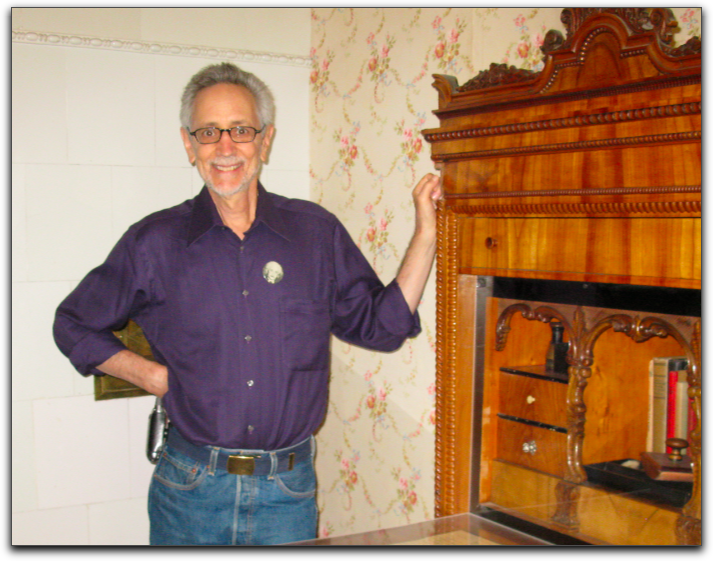
light­ing shab­bat can­dles at 3909 Burn­side Ave. July 6, 1984


A for­mat­ted PDF (8.5×11) ver­sion of this is avail­able for download.


shabbat shalom

shab­bat shalom

Date: 1970s
Size: 4.4
Pin Form: straight
Print Method: cel­lu­loid
Text שבת
שלום

your lapel buttons

Many peo­ple have lapel but­tons. They may be attached to a favorite hat or jack­et you no longer wear, or poked into a cork-board on your wall. If you have any lay­ing around that you do not feel emo­tion­al­ly attached to, please let me know. I pre­serve these for the Jew­ish peo­ple. At some point they will all go to an appro­pri­ate muse­um. You can see all the but­tons shared to date.

Posted in holidays, judaica, lapel buttons, ritual | Tagged , , , , , , , | Leave a comment

It’s very clear

our love is here to stay

While prepar­ing a wed­ding drash for this past week I learned that Ira Gersh­win chan­neled Isa­iah 54:10 in this week’s haf­tarah portion.

Isaiah:

For the moun­tains may move
And the hills be shaken,
But my loy­al­ty shall nev­er move from you,
Nor My covenant of friend­ship be shaken

Gershwin:

In time the Rock­ies may tumble,
Gibral­tar may crumble,
They’re only made of clay,
But our love is here to stay.

It is quite poignant. I did not know that (accord­ing to some sources of mine and the per­son who post­ed this cov­er of the song by Frank Sinatra):

This was the final piece of music writ­ten by George Gersh­win pri­or to his death, and the words to this song had not been writ­ten as yet. It’s hard to imag­ine how his broth­er Ira must have felt pen­ning the lyrics to what he knew was George’s last melody.

…turns out, I did not know, the song is also a favorite of the wed­ding couple.

unfaltering love

Who does Ira have in mind when he writes “our love is here to stay”?

George died on July 11, 1937 which cor­re­sponds to the 10th of Av, 5697. I know that the Gersh­wins were not par­tic­u­lar­ly obser­vant Jew­ish­ly, but, it is pos­si­ble that Ira may have been aware of the peri­od of sev­en haf­tarot of con­so­la­tion that begins imme­di­ate­ly fol­low­ing the obser­vance of Tisha b’Av. Thir­ty days after George’s death, Isa­iah 54:10 would have been the read in the synagogue.

a love supreme

The aware­ness of the fact that you are loved is powerful.

While there is no way to prove or dis­prove it, we Jews believe that the cos­mos is both self-con­scious and loving.

To be loved! In 1967 Bar­nett Helzberg Jr., the thir­ty-some­thing, third gen­er­a­tion pres­i­dent of Kansas City-based Helzberg Dia­monds was ecsta­t­ic because a young woman had just accept­ed his mar­riage pro­pos­al. He had proof that he was loved. Like a nor­mal Amer­i­can busi­ness­man he used the oppor­tu­ni­ty to devel­op an adver­tis­ing cam­paign. Before long he came up with the AM LOVED® pro­mo­tion. The late 1960s was the hey­day of lapel but­tons. If a young man could not buy his girl­friend a dia­mond, he could cer­tain­ly get her a free but­ton that said she was loved. The orig­i­nal but­tons appeared in Eng­lish, but it was not long before they were print­ed in oth­er lan­guages. This is the orig­i­nal Hebrew ver­sion of the but­ton (which I was able to find on eBay):

אני אהובה

אני אהובה I am a beloved

Date: 2000s
Size: 2.5
Pin Form: straight clasp
Print Method: litho
Text אני
אהובה 

The text is odd. I’ve nev­er used, nor heard that phrase used in Hebrew except by a woman who’s name was Ahu­vah. She was the cook at the Habon­im Camp Gilboa (then) in the Newhall — Saugus area north of Los Ange­les when I attend­ed in 1962 or so. She would say “I’m Ahu­vah” (אני אהובה), mean­ing “My name is Ahu­vah”. This is the same text used in a pho­to on the “I am loved” Web site:

mulit-language buttons

mulit-lan­guage buttons


Some­time in the past 10 years or so, some­one at the “I am loved” orga­ni­za­tion came up with a dif­fer­ent Hebrew expres­sion. This one is not that much bet­ter than the first: “[They] love me” (אוהבים אותי). But who is this “they”? It’s cute to note that the orga­ni­za­tion (which gives these but­tons away free of charge), has reg­is­tered the phrase in Hebrew.
אוהבים אותי

אוהבים אותי they love me

Date: 2000s
Size: 2.5
Pin Form: straight
Print Method: litho
Text אוהבים
אותי

Hebrew is pri­mar­i­ly an active lan­guage which may be why the two but­tons use the forms they do. How­ev­er, a more accu­rate expres­sion of the phrase in Hebrew would be to use the “Niphal” construction:

אני נאהב

And, as we approach this Shab­bat of Elul, it is good to remem­ber that אני לדודי ודודי לי… our love is mutu­al. We act from a foun­da­tion of love. When we sup­port one anoth­er in our efforts to change in love, we know we have the pow­er to make those changes a real­i­ty. The love of the cos­mos is part of us, for us to share…

Not for a year
But ever and a day.

The radio and the telephone
And the movies that we know
May just be pass­ing fancies,
And in time may go !

But, oh my dear,
Our love is here to stay.
Togeth­er we’re
Going a long, long way 

your lapel buttons

Many peo­ple have lapel but­tons. They may be attached to a favorite hat or jack­et you no longer wear, or poked into a cork-board on your wall. If you have any lay­ing around that you do not feel emo­tion­al­ly attached to, please let me know. I pre­serve these for the Jew­ish peo­ple. At some point they will all go to an appro­pri­ate muse­um. You can see all the but­tons shared to date.

Posted in holidays, judaica, lapel buttons, music | Tagged , , , , , , , | 1 Comment