jewish environmentalism and tu b’sh’vat

updat­ed Jan­u­ary 10, 2026

a thought regarding the history of Jewish environmentalism (boosted to the top for 1st of Sh’vat, 5786 = Mon, 19 January 2026)

In Jan­u­ary of 1970 I need­ed to make (what for me then was) a sig­nif­i­cant per­son­al deci­sion. Accord­ing the Gre­go­ri­an cal­en­dar I was born on Jan­u­ary 22. How­ev­er, the year I was born, that date cor­re­spond­ed with Rosh H̱odesh Sh’­vat. I noticed then, that in 1970 Jan­u­ary 22 would coin­cide with Tu b’Sh’­vat. I had become more deeply aware of how the Jew­ish luni/solar cal­en­dar func­tioned and want­ed to observe my birth­day’s anniver­sary (by thank­ing my moth­er on her birthing-date). I need­ed to choose between two sig­nif­i­cant dates: Gre­go­ri­an = Tu b’Sh’­vat or Jew­ish = Rosh H̱odesh Sh’­vat. The bit that clinched my deci­sion was when I learned that my broth­er, who had been born four years lat­er (and two weeks ear­li­er accord­ing to the Gre­go­ri­an cal­en­dar) shared the same birth date on the Jew­ish cal­en­dar. Ever since then, when some­one who is not an offi­cial of some kind asks when I was born, I tell them Rosh H̱odesh Sh’­vat.

brothers & mother
broth­ers and moth­er, approx­i­mate­ly 6 months before Jan­u­ary 22, 1970

leafleting the jews

I have writ­ten else­where about leaflet­ing. That year, on Jan­u­ary 19, 1970, the Jew­ish Rad­i­cal Com­mu­ni­ty [of Los Ange­les] issued its sec­ond leaflet (for that year or ever?):

jew­ish rad­i­cal com­mu­ni­ty leaflet; jan­u­ary 19, 1970

THE LIFE OF MAN SPRINGS
FROM THE TREE

-Tal­mud

Tu B’Sh­vat 5730 ……………………………Jan­u­ary 22, 1970

A human being who is out of touch with the land is deprived of an impor­tant spir­i­tu­al dimen­sion. The agrar­i­an soci­ety described in the bible had a deep respect for the fruits of the earth and were as del­i­cate as pos­si­ble in their use of the land. They let their fields go unused one year in sev­en so the soil could be replen­ished; they refrained from eat­ing the fruit of imma­ture trees; they avoid­ed graz­ing sheep in order to pro­tect grass­lands; they for­bade their sol­diers to plun­der the fruit trees of con­quered lands.

I created all my beautiful and glorious works for your sake. Take heed not to corrupt and destroy my world.

Eccle­si­astes Rab­bah 7:13

We no longer live in a pri­mar­i­ly agrar­i­an soci­ety, but a feel­ing of respect for the earth­’s boun­ty is the log­i­cal appli­ca­tion of bib­li­cal vers­es. If we are to pro­tect nat­ur­al resources for future gen­er­a­tions, we must have as our motive sus­te­nance in con­cert with nature not prof­it, exploita­tion and plun­der of nat­ur­al wealth and beauty.

Cor­po­rate farm­ers use dan­ger­ous chem­i­cals on crops, ren­der­ing them unfit or bare­ly fit for human con­sump­tion in order to max­i­mize yields, the sur­plus of which is buried under the ground “for lack of a good mar­ket,” while mil­lions starve. We allow the cor­po­rate states to rape the earth for the enrich­ment of their rul­ing class­es. One exam­ple with which we as Jews and South­ern Cal­i­for­ni­ans have con­tact is the net­work of oil monop­o­lies. Aside from their actions in the Mid­dle East as impe­ri­al­ist inter­est, here in the U.S. they pol­lute the oceans with off­shore drilling, and encour­age the pol­lu­tion of the cities, the air and our lives with their involve­ment in the auto­mo­tive industry.

The land is raped by the greed of the pow­er­ful. Out of respect for our tra­di­tion, Jews must be aware of mod­ern insen­si­tiv­i­ty to the ecol­o­gy and the “own­er­ship rights” which vio­late the nature ben­e­fit which was meant to exist between men and the land.

And they shall build houses and inhabit them;
And they shall plant vineyards and eat their fruit.
They shall not build and another inhabit
They shall not plant and another eat;
For the days of a tree shall the days of My people be,
And My chosen shall long enjoy the work of their hands.

Isa­iah 65:21–22


a brief list of current (as of 1st of Sh’vat, 5786 = Mon, 19 January 2026) jewish environmental organizations

buttons and trees

Very few lapel but­tons exist that refer to Tu b’Sh’­vat direct­ly. While at one time the Zion­ist youth move­ments in Los Ange­les would use the oppor­tu­ni­ty to plant trees in recent­ly burnt areas of Grif­fith Park in con­junc­tion with the Jew­ish Nation­al Fund, the annu­al JNF but­ton (with its image of or sug­ges­tion of tree plant­i­ng) appears at the time of Yom haAtaz­maut. The fol­low­ing but­ton is from the Bal­ti­more Hebrew Con­gre­ga­tion, while it explic­it­ly men­tions plant­i­ng a tree in 1991 sim­i­lar­ly makes no sug­ges­tion that it is asso­ci­at­ed with Tu b’Sh’vat.

i plant­ed a tree at bhc 1991
Date:1991
Size:5.71
Pin Form:clasp
Print Method:cel­lu­loid
TextSpon­sored • by • the • BHC • Sis­ter­hood •
I
plant­ed
a tree
at
BHC
1991

your lapel buttons

Many people have lapel buttons. They may be attached to a favorite hat or jacket you no longer wear, or poked into a cork-board on your wall. If you have any laying around that you do not feel emotionally attached to, please let me know. I preserve these for the Jewish people. At some point they will all go to an appropriate museum. You can see most the buttons shared to date.

We broth­ers took anoth­er pho­to with our moth­er a month before she died.

broth­ers and moth­er, approx­i­mately a month before her death

As I first pre­pared this post, 43 years after we first wrote the leaflet (it is in Jay’s print­ing), we broth­ers sat beside each oth­er in his home on Kib­butz Hat­zor-Ash­dod, review­ing pho­tos of the two of us and of our moth­er (and oth­er mem­bers of the fam­i­ly). We con­tin­ue to share (among many oth­ers) com­mon ideas about envi­ron­men­tal­ism, pol­i­tics and Jew­ish life. And I won­der, when did the Jew­ish envi­ron­men­tal move­ment begin?


Posted in family, from the archives, holidays, judaica, lapel buttons, politics, what, when, who | Tagged , , , , , , , | Leave a comment

what does chanukkah celebrate?

each generation reinterprets the meaning of its holidays

ted golden - judah maccabee
Ted Gilien — Judah Mac­cabee
from the Nathan & Faye Hurvitz art collection

• the 2nd book of maccabees suggests it is a delayed celebration of sukkot (in chapter 10:9):

And they cel­e­brat­ed a fes­ti­val to the Lord for eight days, like the days of the fes­ti­val of Sukkot, and they remem­bered the pre­vi­ous days when they cel­e­brat­ed the fes­ti­val of Sukkot in moun­tains and in caves, and they went out in the desolation/wilderness, like wild beasts.

• early rabbis deprecated the military aspects of the maccabean revolt

• anti-Zionist Rabbi Dr. Adolf Jellinek of late 19th Century Vienna wrote:

We are Ger­mans, French­men, Mag­yars, Ital­ians, and so forth, with every fiber of our being. We have long ceased to be true, thor­ough­bred Semi­tes, and we have long ago lost the sense of Hebrew nation­al­i­ty.” and “There is no Jew­ish nation. The Jews form, it is true, a sep­a­rate stock, a spe­cial reli­gious com­mu­ni­ty. They should cul­ti­vate the ancient Hebrew lan­guage, study their rich lit­er­a­ture, know their his­to­ry, cher­ish their faith, and make the great­est sac­ri­fices for it; they should hope and trust in the wis­dom of divine prov­i­dence, the promis­es of their prophets, and the devel­op­ment of humankind so that the sub­lime ideas and truths of Judaism may gain the day. But for the rest, they should amal­ga­mate with those nations whose cit­i­zens they are, fight in their bat­tles, and pro­mote their insti­tu­tions for the wel­fare of the whole.”

• early 20th century Louis D. Brandeis, suggested a zionist appreciation in an address delivered in Boston, 1915

Chanukkah, the Feast of the Mac­cabees, cel­e­brates a vic­to­ry-not a mil­i­tary vic­to­ry only, but a vic­to­ry also of the spir­it over things mate­r­i­al. Not a vic­to­ry only over exter­nal ene­mies-the [Hel­lenist] Greeks; but a vic­to­ry also over more dan­ger­ous inter­nal ene­mies. A vic­to­ry of the many over the ease-lov­ing, safe­ty-play­ing, priv­i­leged, pow­er­ful few, who in their pli­an­cy would have betrayed the best inter­ests of the peo­ple, a vic­to­ry of democ­ra­cy over aristocracy.

As part of the eter­nal world-wide strug­gle for democ­ra­cy, the strug­gle of the Mac­cabees is of eter­nal world-wide inter­est. It is a strug­gle of the Jews of today as well as those of two thou­sand years ago. It is a strug­gle in which all Amer­i­cans, non-Jews as well as Jews, should be vital­ly inter­est­ed because they are vital­ly affected.

The Mac­cabees’ vic­to­ry proved that the Jews-then already an old peo­ple-pos­sessed the secret of eter­nal youth: the abil­i­ty to reju­ve­nate itself through courage, hope, enthu­si­asm, devo­tion and self-sac­ri­fice of the plain peo­ple. This will bring again a Jew­ish Renaissance.

• mid-20th century American communist Morris Schappes praises the Jew’s struggle against fascism

For My Glo­ri­ous Broth­ers deals with obe­di­ence to law. Resis­tance to tyrants, we learn from this retelling of the hero­ism of the Mac­cabees, is the truest obe­di­ence to law. We derive the les­son from this inspir­it­ing nov­el deeply and mov­ing­ly. The writ­ing of it must have been not a dis­trac­tion from, but an inten­si­fi­ca­tion of, his still uncom­plet­ed expe­ri­ence of resis­tance to the Amer­i­can fas­cists. In forg­ing his Mac­cabees, Fast ham­mered steel for his own use; his own con­duct in bat­tle stead­ied the flame with which the Mac­cabees burn.


In light of the above, the fol­low­ing but­ton I pur­chased from Egg Cream Arts in Wash­ing­ton Square Park on Octo­ber 28, 2019 feels appropriate.

Date:2019
Size (cm):6.7 x 4.3
Pin Form:clasp
Print Method:cel­lu­loid
TextHAPPY CHANUKAH

your lapel buttons

Many peo­ple have lapel but­tons. They may be attached to a favorite hat or jack­et you no longer wear or poked into a cork-board on your wall. If you have any lying around that you do not feel emo­tion­al­ly attached to, please let me know. I pre­serve these for the Jew­ish peo­ple. They will soon be donat­ed to the Yeshi­va Uni­ver­si­ty Muse­um in NYC. You can see many of the but­tons shared to date.


A question…

…for those who live in the mod­ern world, “don’t believe in mir­a­cles”, and do not want to cel­e­brate the nation­al­is­tic aspects of Chanukkah:

…what does Chanukkah celebrate?

Please feel free to leave a comment.


sources for the story of chanukkah

First and formost there are the original sources, the Books the Maccabees.

Book I and Book II (each with hyper­links!) and Book IV [The Revised Stan­dard Ver­sion of the Bible is copy­right© Nation­al Coun­cil of Church­es of Christ in Amer­i­ca and dis­trib­uted to reg­is­tered users (see User Agree­ment) with their kind permission.]

On the Mac­cabees in gen­er­al cul­ture, the Book of Mac­cabees is referred to in Moby Dick — CHAPTER 133 “THE CHASE — FIRST DAY by Her­man Melville

Joesphus’ “Antiquities of the Jews” also tells the story.

This edi­tion on the WWW is trans­lat­ed by William Whiston

Book XII con­tain­ing the inter­val of a hun­dred and sev­en­ty years. from the death of Alexan­der the Great to the death of Judas Maccabeus.

Book XIII con­tain­ing the inter­val of eighty-two years, from the death of Judas Mac­cabeus to the death of Queen Alexandra.

The story of Chanukkah is told well in the historical novel by Howard Fast, My Glorious Brothers.

cover of the 1st edition of My Glorious Brothers by Howard Fast borrowed from https://www.trussel.com/hf/glorious.htm

For a list of edi­tions and a first edi­tion avail­able.

For a short telling of the plot.


This page was first pub­lished at davka.org before the exis­tence of the Wikipedia. At that time, I was pleased to see that some­one had devot­ed an entire site to the works of Howard Fast. That is now gone, but Fast does have a Wikipedia page. The page that is now gone had an interesing piece by Fast on being Jew­ish. Howard Fast has writ­ten a num­ber of nov­els of his­tor­i­cal fic­tion of Jew­ish inter­est. With the exis­tence of the Wikipedia page some of those oth­ers are no longer “nec­es­sary”. How­ev­er, one devo­tee has main­tained his inter­est with a bib­li­og­ra­phy of Howard Fast (and all his alias­es). My Glo­ri­ous Broth­ers appeared in a list of texts for teach­ing Jew­ish His­to­ry from the what was the UAHC Edu­ca­tion Depart­ment, but that is no longer. Also gone is a list of texts for teach­ing Ancient & Medieval His­to­ry from J. S. Arken­berg of ORB [The Online Resource Book for Medieval stud­ies (ORB) which was a coop­er­a­tive effort on the part of schol­ars across the Inter­net to estab­lish an online text­book source for medieval stud­ies on the World-Wide Web. In prin­ci­ple, authors of the var­i­ous arti­cles that make up ORB main­tain their own arti­cles at their own loca­tions. Each arti­cle is con­nect­ed to ORB’s Title Index, which can be accessed at any time by click­ing on the ORB icon (see the top left cor­ner above) any­where it appears. In addi­tion, each arti­cle will be linked direct­ly to relat­ed arti­cles and oth­er infor­ma­tion avail­able on the Web. Some authors wel­come your ques­tions, com­ments and obser­va­tions about their arti­cles. This invi­ta­tion is indi­cat­ed by a sen­si­tive mail icon after the author’s name.] Anoth­er list that has dis­ap­peared is of texts of his­tor­i­cal fic­tion main­tained by Soon-Yong Choi, Ph.D. (Cen­ter for Research in Elec­tron­ic Com­merce, Grad­u­ate School of Busi­ness, The Uni­ver­si­ty of Texas at Austin His­tor­i­cal Fic­tion Site)

Yet anoth­er retelling that was on the WWW was The Mac­cabean Revolt (as part of A Peo­ple’s Epic by Wal­ter L. Field [95 years young… when this page was first pub­lished in 1997], he prob­a­bly has the dis­tinc­tion of being the old­est liv­ing web pub­lish­er. Wal­ter has authored numer­ous books includ­ing “A Peo­ple’s Epic,” a 95 page his­to­ry of the Jew­ish peo­ple done in an unusu­al rhyme form called ter­cet. He has also authored “The Tale of the Horse,” “Sym­pho­ny of Threes,” and “Glean­ings from the Bible.” in rhyming verse). You can still find copies of the book in used book­stores on the Web

A his­to­ry of the peri­od appears at the Inge­borg Ren­nert Cen­ter for Jerusalem Stud­ies of Bar-Ilan Uni­ver­si­ty Sec­ond Tem­ple Peri­od (538 B.C.E. to 70 C.E.) Per­sian Rule.

© MemHeh Pro­duc­tions pre­vi­ous update: Decem­ber 16, 1997.
Updat­ed Decem­ber 9, 2009.
Most recent update Decem­ber 8, 2025.


Some inter­est­ing links relat­ed to Olive Oil.

When in Israel just after Chanukkah 5757 we worked a day on an archae­o­log­i­cal dig at Tel Morasha where we saw an oil press under­ground.

Olive oil has a rich and endur­ing his­to­ry.… It lit the lamps of the tem­ples and homes of our ancient civ­i­liza­tions. The Wikipedia arti­cle: Olive Oil (which did not exist when this page first went online [the orig­i­nal link has rotted]).

John Bergman, pres­i­dent of Bergman Euro-Nation­al, a real estate invest­ment com­pa­ny writes about Olives. In Oil Coun­try? [link rot]

An Ode to Olives or The Olives Home Page, main­tained by Nao­mi Smith includes links to lots of infor­ma­tion about olives, recipes using olives, books about olives, places to buy olives and olive prod­ucts and oth­er olives on the web! [link rot]

Fran­toio Olive Oil press is (accord­ing to them) the only U.S. restau­rant with in-house olive oil pro­duc­tion (with pho­tographs of the press). [link rot]

This text was first post­ed on June 2, 1999.
Most recent pri­or update: Decem­ber 9, 2009.


on the winter solstice

My father used to tell us that there were two piv­otal “events” in world his­to­ry: the indus­tri­al rev­o­lu­tion and the win­ter sol­stice. There are sug­ges­tions that Chanukkah is a win­ter sol­stice hol­i­day (the increase in lights is a good hint). Here are a few of the more inter­est­ing gen­er­al links to sol­stice relat­ed sites.

  • The win­ter sol­stice is one of those days that has been impor­tant since his­to­ry trails back into folk­lore and myth. Tech­ni­cal­ly it is the day of the year when day­time is short­est. Although you might say that it might be a prod­uct of neo-mod­ern insan­i­ty, it does have a tra­di­tion, and aware­ness of that tra­di­tion helps. Amaz­ing­ly enough the Wikipedia. arti­cle (checked in 1997) cites the fol­low­ing item, a link on this site for some of its information!
  • Win­ter Festivals/Festivals of Light (pre­pared by Loren Mad­sen)
  • A Sol­stice Web Cam­era
    THE WINTER-SOLSTICE-SUNSET-IN-A‑5,000-YEAR-OLD-CAIRN
    Ancient Euro­peans often con­struct­ed mega­liths and cairns so that they’d align with astro­nom­i­cal events. For sci­en­tif­ic rea­sons, a cam­era is record­ing the win­ter sol­stice sun at one such cairn in Orkney, Scot­land, and of course some­body came up with the bril­liant idea of turn­ing this into a Web cam [link rot]. Broad­casts are sched­uled for Decem­ber 10 to 22, every­day between 14:30 and 15:15 GMT (1997).
    View at the BBC
    View at Newgrange

This text was first post­ed in 1997.
The pre­vi­ous updates: Jan­u­ary 24, 2001;
most recent update Decem­ber 9, 2009.


Down­load and print A Mad Libs Chanukkah Sto­ry to enjoy at your Chanukkah par­ty.
Down­load and print Chanukkah Ana­grams to enjoy at your Chanukkah par­ty (answer here).

…to be continued…


Posted in holidays, judaica, lapel buttons, politics | Tagged | Leave a comment

may the light shine within us

Psalm 97:11a

Psalm 97:11a

א֭וֹר זָרֻ֣עַ לַצַּדִּ֑יק
Light is sown for the righteous…

In the New Year, as we seek to tend to our world in righteousness,
may the light sown within it shine within us as well.

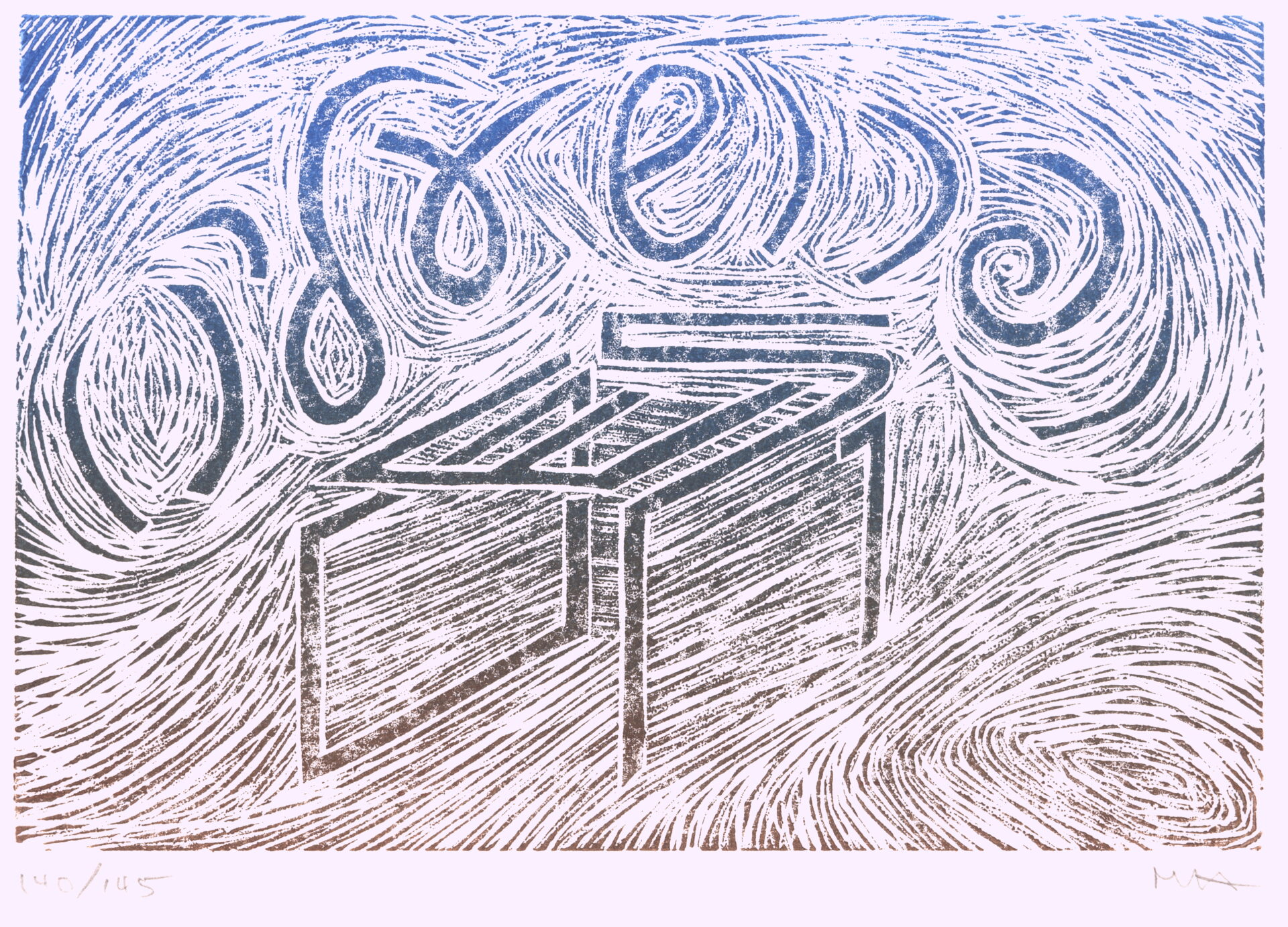
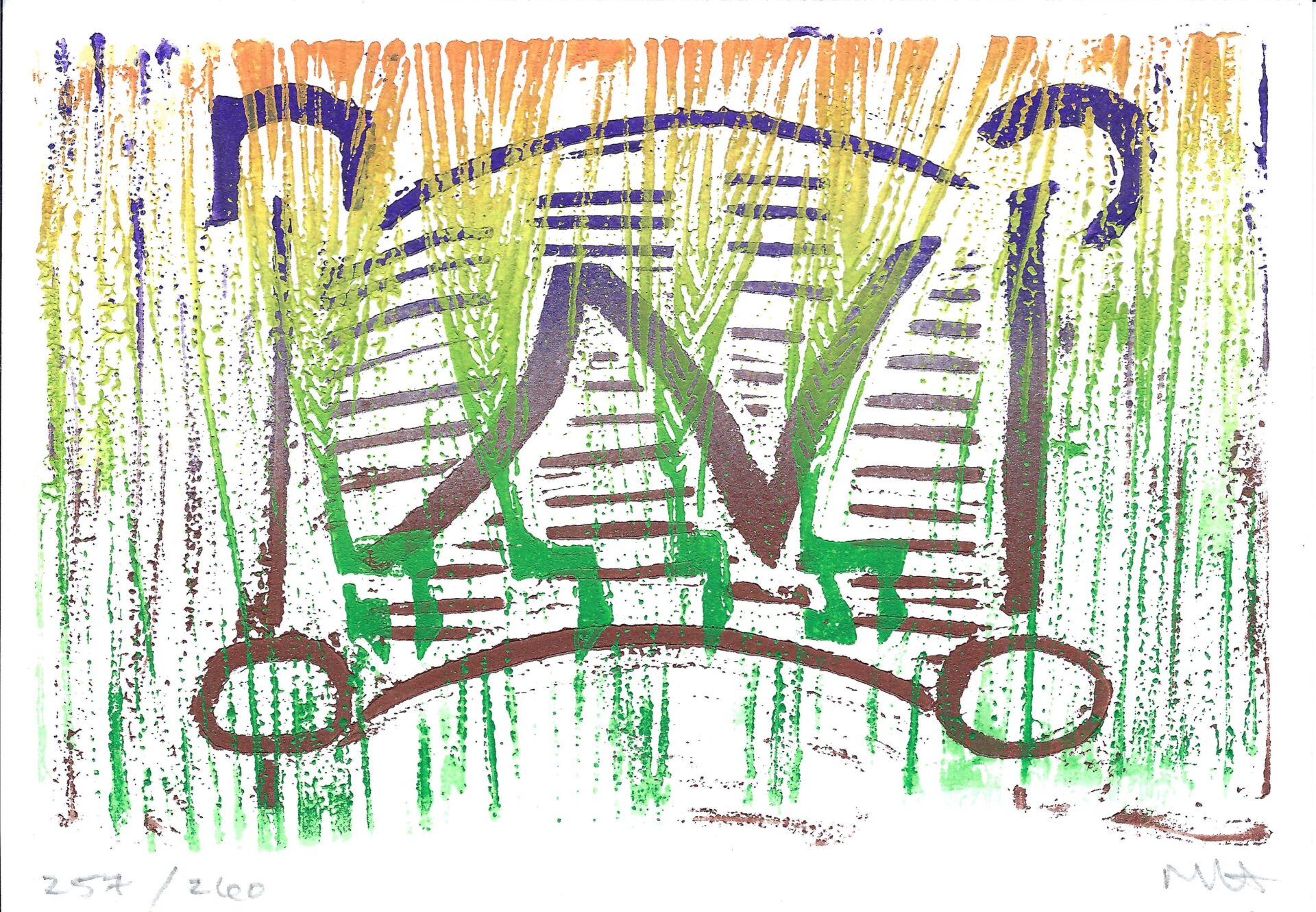
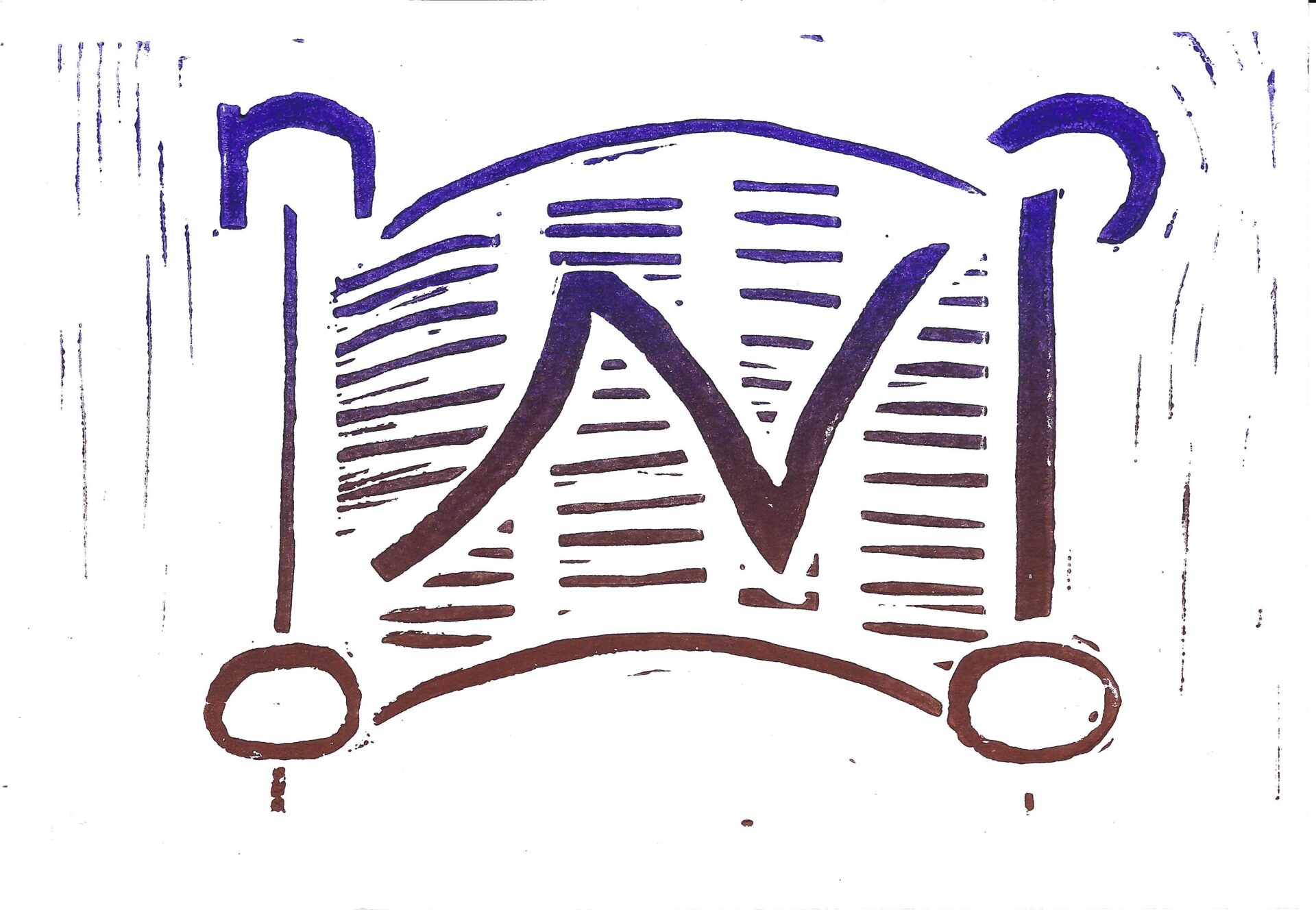
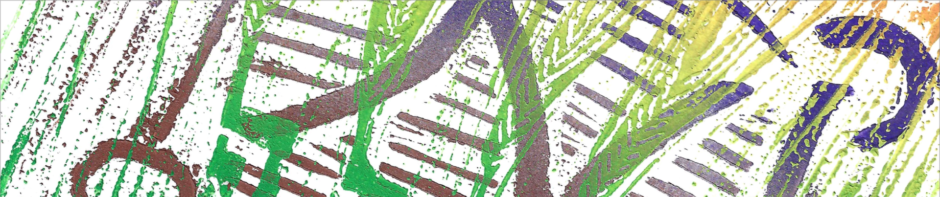
The image on this year’s card uses the first three words of Psalm 97:11 in three fonts and colors:

א֭וֹר זָרֻ֣עַ לַצַּדִּ֑יק
  • אור — Light: uses sil­ver in a font called Stam Ashke­naz CLM. [STaM (סת״ם)] is an acronym for: Sifrei Torah (ספרי תורה) Torah scrolls; Tefill­in (תפילין) worn dur­ing prayer; Mezu­zot (מזוזות) scrolls affixed to doorposts.]
  • זרעSown like seeds buried in the earth: uses brown in a mod­ern script font called Dana Yad AlefAlefAlef.
  • צדיק- Right­eous: uses blue in a tra­di­tion­al Euro­pean font called Yid­dishkeit AlefAlefAlef.

the printing process

the first block “right­eous” as the sky:

the sec­ond block “light” shines/radiates:

third block “sown” in the soil of our world:

the light shines on the righteous:

…from being sown under­neath in the world.

Linoleum cut pro­duced by Mark, Sum­mer 2025
©Mark Hurvitz 2025

list of cards

last year’s card

Posted in holidays, judaica, ritual | Tagged , , , | Leave a comment