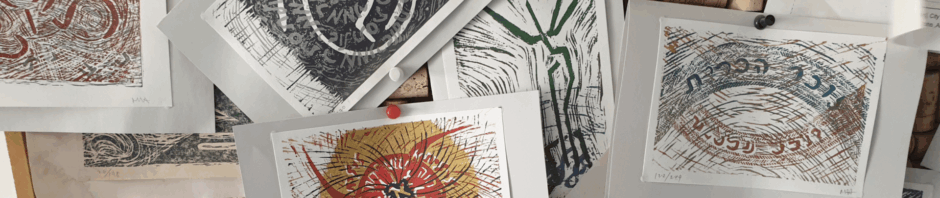
For many years, I’ve enjoyed how Hebrew letters in micrographic art express the text’s meaning through the flow of the letters.
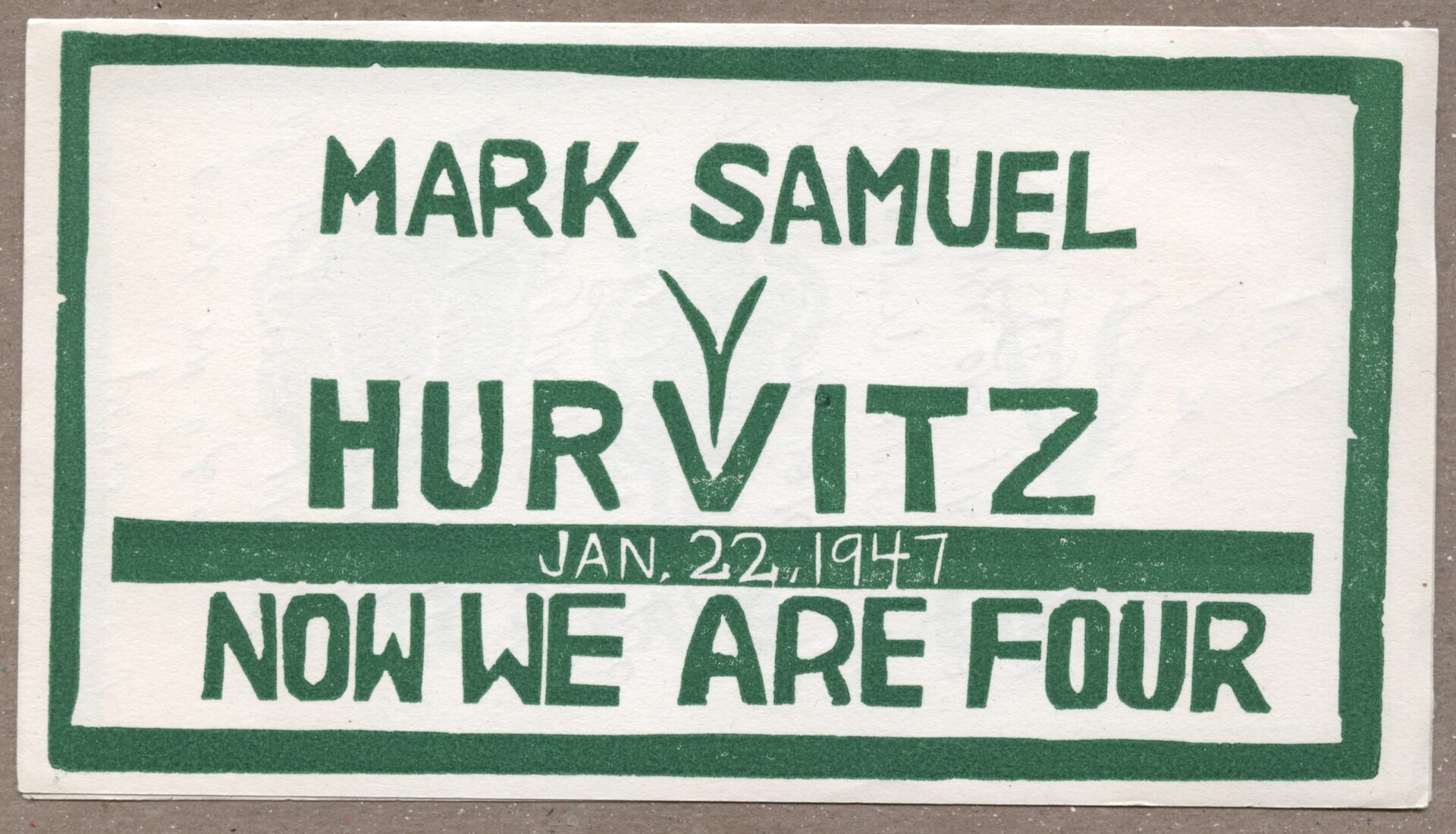
Linoleum block prints based on words were part of my childhood. My father created three linoleum block print birth announcements for me and my two siblings.
In my middle school print shop, while learning how to use moveable type, I also ventured into linoleum block printing. Staying late after school, I printed a Chanukkah card that my parents sent out to relatives that year.
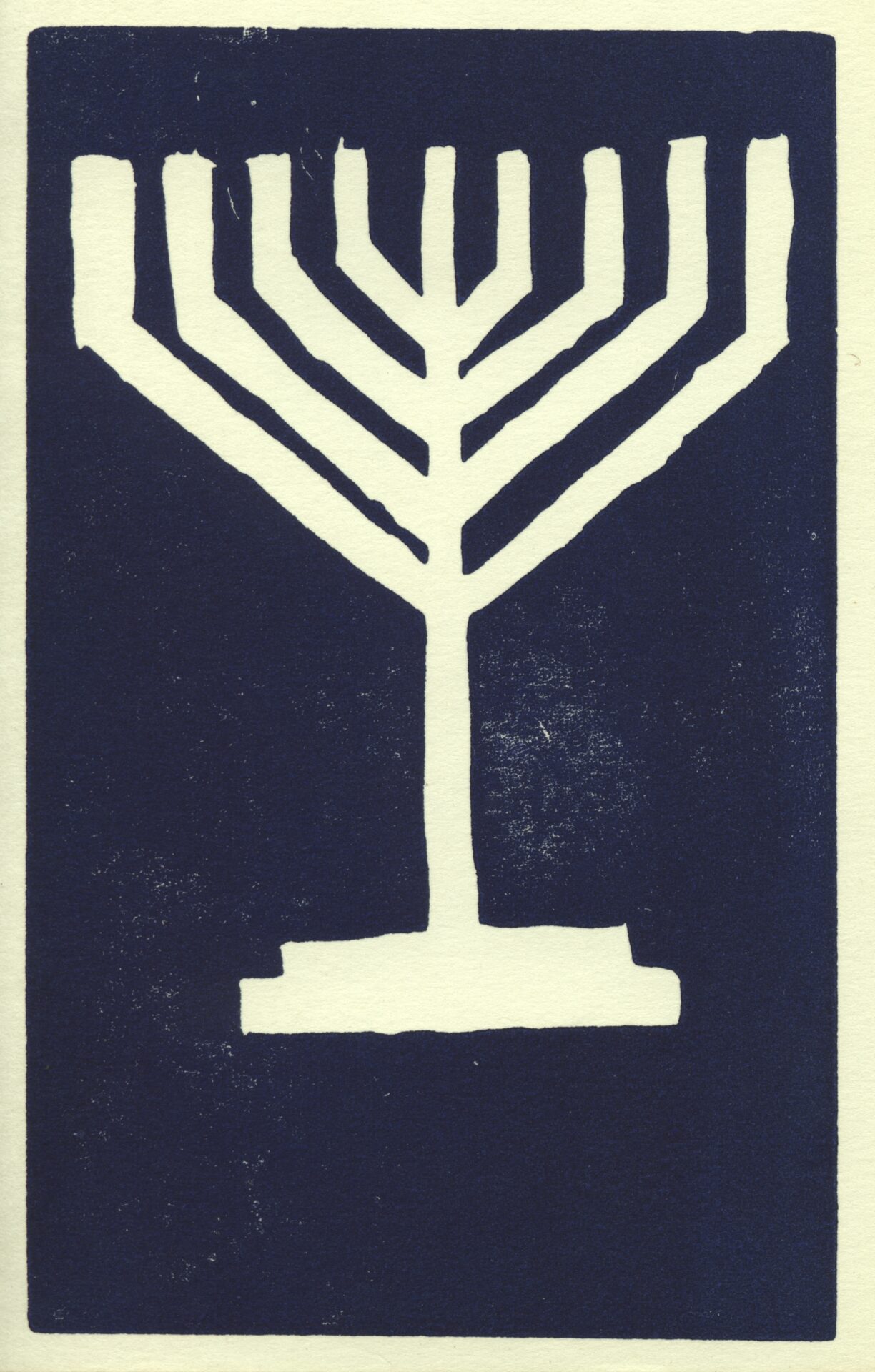
While neither my father’s birth announcements nor my Chanukkah card included micrography, they introduced me to combinations of the printed word and image.
My interest in printing expanded during my college years. I helped design many political leaflets and produced a poster-sized monthly Jewish community calendar for Jewish youth in the Los Angeles area. As a member of the editorial board and later as its editor (since Winter 1970) of the journal Davka, I learned even more about printing and publication. We also produced a portfolio of high-quality reproductions of prints depicting the vanished world of Eastern European Jewry. This practical interest in printing turned historical at HUC-JIR when I wrote my rabbinic thesis on “The Rabbinic Perception of Printing as Depicted in Haskamot and Responsa.”
Perhaps that involvement in printed images and words led me to find the linoleum block, cutters, paper, and inks in the art room of Camp Swig in 1996 while on rabbinic faculty. I decided to see if I could use these tools to express on paper an idea for a mizrach I had in my head. That effort turned into a Rosh Hashanah card that we sent out to family and friends in 1997, and came to be the first of many.
And, every year since then I browse our literature for a pasuq that both touches me and lends itself to using its letters for a visual. It’s become a year-long meditative practice: searching, imagining, designing, drawing, cutting, printing, describing—all resulting in a unique greeting for the start of each Jewish year for—the past many years.
Psalm 16:8 — 5757\1996 — For a new year of peace
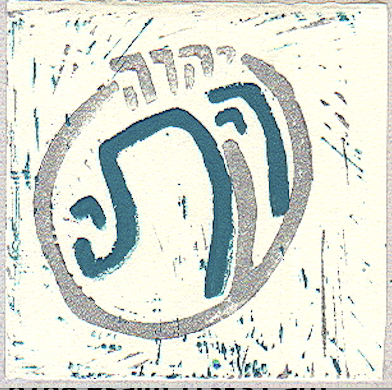
The image uses the first word of Psalm 16 verse 8 to form of a Shiviti, The shape is mandala-like. The shin ש encircles the other letters of the word and “hold above” the Tetragrammaton, keeping the יהוה before the viewer.
Psalm 113:3 – 5758\1997 – May the year 5758 bring blessings of peace from east to west…
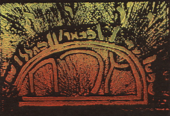
The image uses the entire verse from Psalm 113:3 (מִמִּזְרַח־שֶׁ֥מֶשׁ עַד־מְבוֹא֑וֹ מְ֝הֻלָּ֗ל שֵׁ֣ם יְהֹוָֽה From eastern sunrise to its setting the name יהוה is praised.) using the text to form a Mizrach. The two מs outline the rising/setting sun while the root of the word “shine”. The bulk of the verse reads from right to left as the sun’s corona while the Tetragrammaton יהוה glows above.
Isaiah 45:7 — 5759\1998 — May the year 5759 bring blessings of peace in both light and darkness.
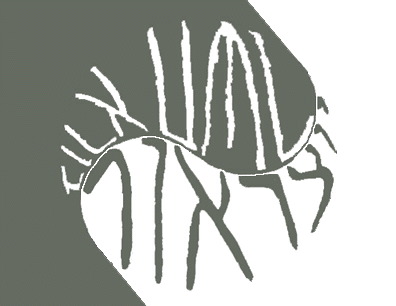
The image uses the first four words of Isaiah 45:7 (יוֹצֵ֥ר אוֹר֙ וּבוֹרֵ֣א חֹ֔שֶׁךְ I form light and create darkness,) in the shape of the Yin and Yang symbol — light and darkness shifting from one to the other.
Psalm 119 — 5760\1999 — May the new year 5760 bring blessings of peace as we continue on our way.
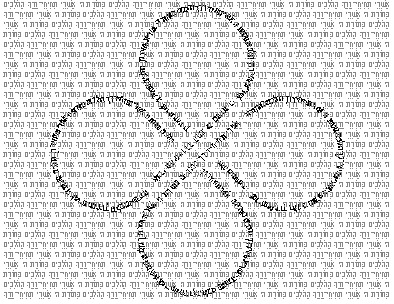
The image uses the text of the first verse of Psalm 119:1 ( אַשְׁרֵ֥י תְמִֽימֵי־דָ֑רֶךְ הַ֝הֹלְכִ֗ים בְּתוֹרַ֥ת יְהֹוָֽה Happy are those whose way is blameless, who follow the teaching of the יהוה.) in the background repeated, row after row, as well as the “cloverleaf” (traffic pattern) in the foreground.
Psalm 92:13 — 5761\2000 — May justice… and with it peace flourish in the new year 5761.
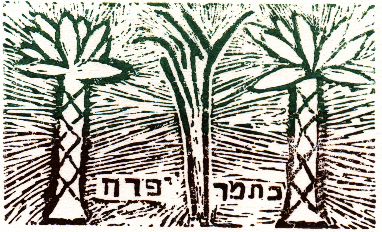
Noam helped with this card, cutting the two palm trees on the edges. The first half of the verse states (צַ֭דִּיק כַּתָּמָ֣ר יִפְרָ֑ח The righteous shall flourish like a date-palm) The middle tree is formed by the letters of the word צדיק (in which the final form of the צ is used: ץ to give the palm tree its trunk).
Psalm 90:12 — 5762\2001 — May we gain hearts of wisdom, so that the year 5762 will be one of peace.
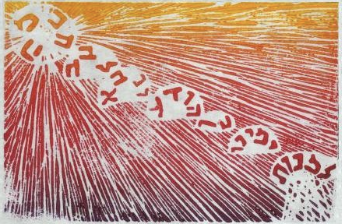
The individual words of the psalm (לִמְנ֣וֹת יָ֭מֵינוּ כֵּ֣ן הוֹדַ֑ע וְ֝נָבִ֗א לְבַ֣ב חׇכְמָֽה Teach us to number our days well, that we may obtain a heart of wisdom.) rise from dark to brilliant as the text reaches חׇכְמָֽה wisdom.
Psalm 118:19 — 5763\2002 — May acts of righteousness in the year 5763 open the Golden gates of Mercy and lead to a world of peace.
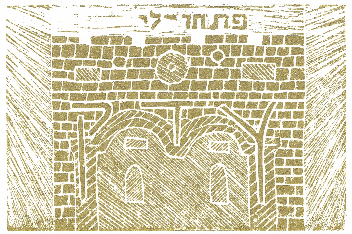
Based on the first half of the Psalm’s verse (פִּתְחוּ־לִ֥י שַׁעֲרֵי־צֶ֑דֶק Open for me the gates of righteousness), the three letters of the word צדק (righteousness or justice) form the outline of the sealed openings of the ancient Golden Gate, also known as the Gate of Mercy, leading from the east to the Temple Mount in Jerusalem.
Proverbs 3:17b — 5764\2003 — May all our paths in the coming year 5764 lead us toward peace.

At the end of the Torah service, when the Torah is put back in the ark, the congregation recites Proverbs 3:17 (דְּרָכֶ֥יהָ דַרְכֵי־נֹ֑עַם וְֽכׇל־נְתִ֖יבוֹתֶ֣יהָ שָׁלֽוֹם Her (Torah’s) ways are ways of pleasantness, And all her paths, peace.). The card has two images. The background cut is based on a map of roads in the area of (what I thought was a town called) Peace Glenn, RI (the dot)… though I cannot find such a town in 2024. Printed over that is a (Torah) scroll with the phrase כׇל־נְתִ֖יבוֹתֶ֣יהָ, suggesting that the Torah’s paths lead to peace.
[Beginning this year, I started numbering and signing the cards.]
Sifra to Psalm 18:11–12 and Siddur: Ma’ariv: Hashkiveinu — 5765\2004 — May our efforts in the year 5765 spread clouds of glory as we build true tabernacles of peace.

[…to be continued…]
Lamentations 3:52 — 5766\2005 — May our endeavors in the year 5766 release all that threatens to ensnare us, giving wing to a world of peace, blessing, and joy.
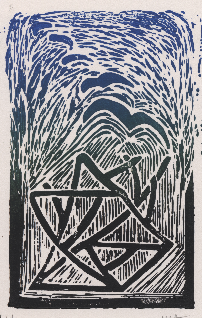
In memory of Faye (Faigie, Fannie (Avrunin)) Hurvitz
(ציפורה בת מאיר וחנה)
21st of Tevet 5674 — 8th of Tammuz 5765
December 20, 1913 (the winter solstice) — July 14, 2005
The image of the card inverts the simple meaning of the first half of the verse from Lamentations: צ֥וֹד צָד֛וּנִי כַּצִּפּ֖וֹר (My foes have snared me like a bird). The dark “snare” at the bottom of the image is formed by the letter צ turned in various directions:
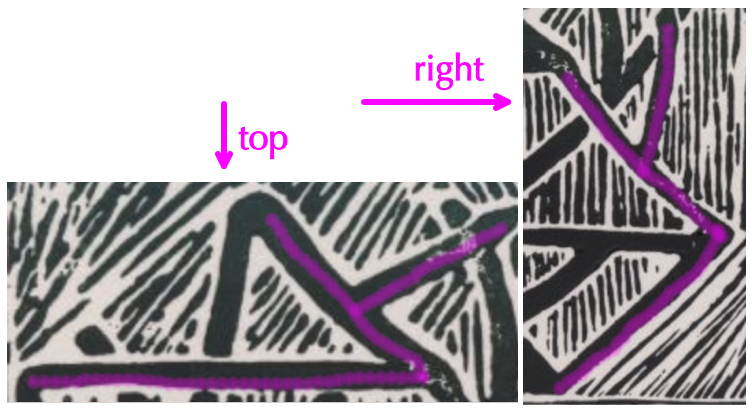
Escaping the snare into the light blue (like birds), read from right to left and bottom to top, is the word צדוני.
Leviticus 25:10 — 5767\2006 — May our endeavors in the year 5767 proclaim liberty throughout the land, creating a world at peace.
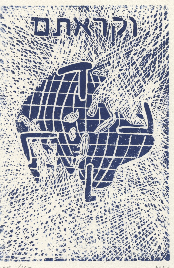
The image on the card shows the eastern hemisphere turned 90º counterclockwise (so that the north is on the left). This image shows the hemisphere with the north on top:
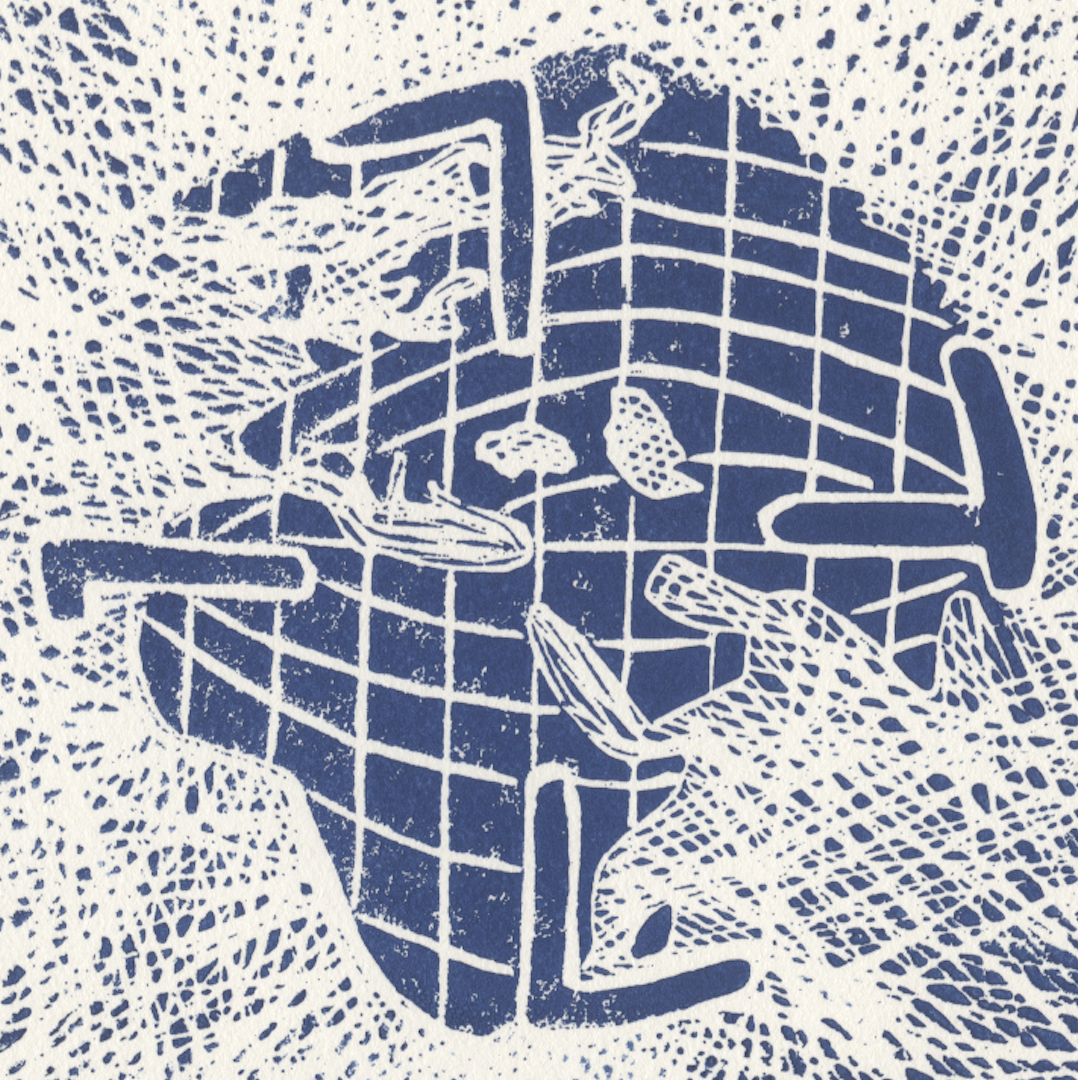
The full image uses two words of the verse (as on the Liberty Bell): “וּקְרָאתֶ֥ם דְּר֛וֹר” “Proclaim liberty” and the letters of the word “דְּר֛וֹר” (liberty) appear at the cardinal points of the compass.
Psalm 118:5 — 5768\2007 — May our voices spread from the narrow places to the broad spaces calling for justice and peace in the year 5768.
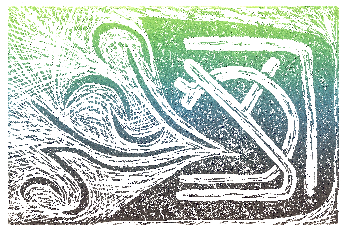
Producing the card was difficult this year, with all the changes and moves. The image itself is not as successful as I would have hoped. Avigail and Noam helped me come up with something that would work. And then later, after I’d made the cut I had another, better, idea that might work (for some other year). Periodically, (as in 2005) the text and the image relate to something in my life. This one seems to reflect that as well. Based on the text: “מִֽן־הַ֭מֵּצַר קָרָ֣אתִי” “From the narrow place I called out…” I sent off the collection of a few hundred vinyl recordings of Jewish interest that have sound “hidden” in the narrow grooves to the Dartmouth Jewish Sound Archive. Then we left the narrowness (at least in some respects v’haMeivin yavin) of Southern California, experienced the narrowness of the Nile River Valley, passed by the Straits of Gibraltar, and settled in the narrow canyons of Manhattan.
On the left of the image, the four letters מצר “strait” out of which the “cry” קראתי emerges to the right.
Psalm 118:22 — 5769\2008 — In our efforts to build a world at peace may we see the potential in every stone.
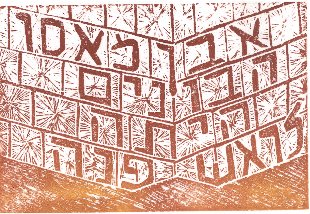
We visited the town of Rosh Pinna (“cornerstone”) in July of 2007. The stones of the walls of the illustrated building have the letters of the Psalm “אֶ֭בֶן מָאֲס֣וּ הַבּוֹנִ֑ים הָ֝יְתָ֗ה לְרֹ֣אשׁ פִּנָּֽה” (The stone that the builders rejected has become the chief cornerstone.) “carved” on them. The stone at the bottom front… the “cornerstone” is missing. (Oddly enough, there is another Rosh Pinah with a Jewish connection in Namibia.)
Leviticus 19:10b — 5770\2009 — As we gather our share in the new year may we live in a world of plenty and of peace.
.png)
The image uses a portion the second half of the biblical text: “וְכַרְמְךָ֙ לֹ֣א תְעוֹלֵ֔ל וּפֶ֥רֶט כַּרְמְךָ֖ לֹ֣א תְלַקֵּ֑ט לֶֽעָנִ֤י וְלַגֵּר֙ תַּעֲזֹ֣ב אֹתָ֔ם אֲנִ֖י יְהֹוָ֥ה אֱלֹהֵיכֶֽם׃” (You shall not pick your vineyard bare, or gather the fallen fruit of your vineyard; you shall leave them for the poor and the stranger: I יהוה am your God.) appear as a cluster of grapes on the vine (as well as a tendril leading from the stem to the larger leaf above.
Pirke Avot 1:2 — 5771\2010 — May we secure our world on a foundation of learning service and deeds of loving-kindness.
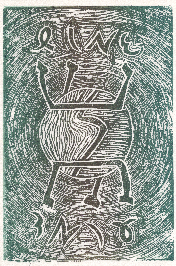
Shimon the Righteous was one of the last of the men of the great assembly. He used to say:
“עַל שְׁלשָׁה דְבָרִים הָעוֹלָם עוֹמֵד, עַל הַתּוֹרָה וְעַל הָעֲבוֹדָה וְעַל גְּמִילוּת חֲסָדִים” (The world stands upon three things: the Torah, the Temple service, and the practice of acts of piety.)
In the center of the card a “globe” rests in a three-legged stand which serves as its foundation. The three-legged globe-stand can be stood with either side up. The three-legged stand is formed by the Hebrew letter ש. The line that demarcates the east and west hemispheres is formed by the Hebrew letter ל. Beneath and above the globe the word עוֹמֵד (stand) appears.
Genesis 1:1–2 — 5772\2011 — May our efforts in the new year bring new creation out of chaos.
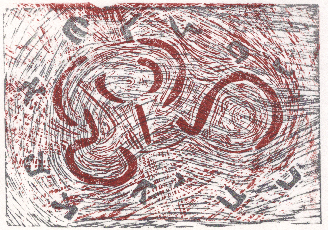
בְּרֵאשִׁ֖ית בָּרָ֣א אֱלֹהִ֑ים אֵ֥ת הַשָּׁמַ֖יִם וְאֵ֥ת הָאָֽרֶץ׃ וְהָאָ֗רֶץ הָיְתָ֥ה תֹ֙הוּ֙ וָבֹ֔הוּ וְחֹ֖שֶׁךְ עַל־פְּנֵ֣י תְה֑וֹם וְר֣וּחַ אֱלֹהִ֔ים מְרַחֶ֖פֶת עַל־פְּנֵ֥י הַמָּֽיִם׃
When God began to create heaven and earth—the earth being unformed and void, with darkness over the surface of the deep and a wind from God sweeping over the water.
The large red image in the center uses the letters of the words “unformed and void” to form the shape of a fetus. The “head”, תהו is read from right to left. The “feet”, בהו is read from the bottom right clockwise.
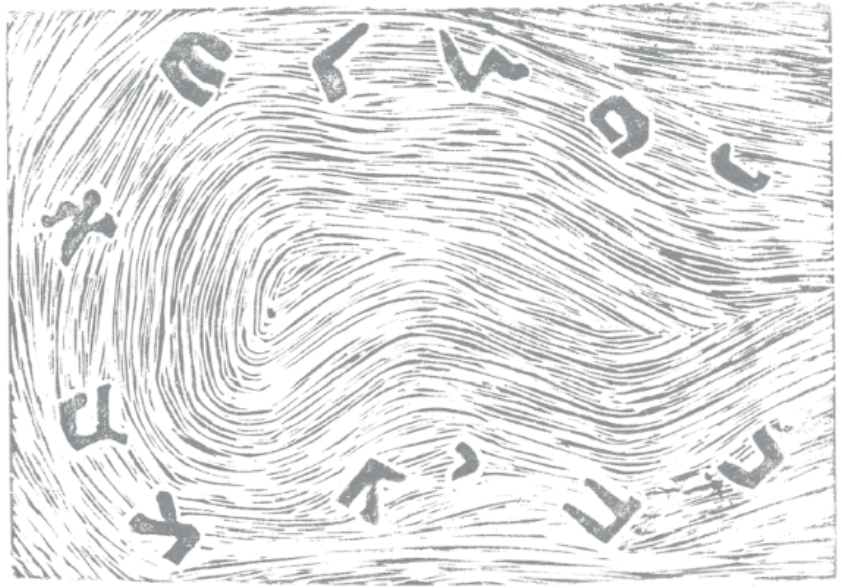
Randomly swirling around the “fetus”, all, and only, those letters that appear in the two verses appear.
Perhaps, by chance, our first grandchild (Amiel) was born a couple of days before Rosh haShannah that year.
Psalm 130:1b — 5773\2012 — May our voices reach up from the depths to achieve a world of wholeness and peace.
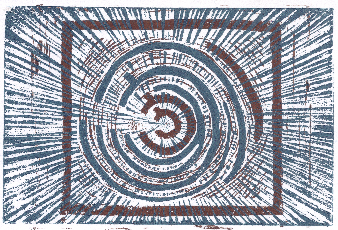
“מִמַּעֲמַקִּ֖ים קְרָאתִ֣יךָ” (Out of the depths I call You)
The word ממעמקים is read from the center to the periphery. The root עמק is blueish gray, the letters that “decline” it ממ_ _ _ים are brown.
[Rachel’s mother died two weeks before Rosh haShannah that year.]
| Deuteronomy 30:13 | 5774 | 2013 | May our efforts in the New Year bring a world of wholeness and peace closer to us. |
| Psalm 23:5b | 5775 | 2014 | May our efforts in the New Year overflow with goodness and help create a world of wholeness and peace. |
| Psalm 27:9a | 5776 | 2015 | May the new year be a time of honesty with ourselves and full presence with one another, bringing us closer to a world of wholeness and peace. |
| Siddur : Kedushat haYom | 5777 | 2016 | With purified hearts may our honest efforts build a world of justice and peace. |
| Psalm 1:3 | 5778 | 2017 | May we plant ourselves by sources of sustenance and use those sources to build a world of peace and plenty. |
| Mishneh Torah, Blessings 10:16; based on Genesis 9:11 | 5779 | 2018 | May we strengthen our covenantal relationships as we reflect and reinforce the love of a caring universe. |
| Numbers 6:25 | 5780 | 2019 | May the breath of the cosmos illuminate us and be generous to us. |
| Ezekiel 6:16 | 5781 | 2020 | As the urgency of this New Year breathes its birthing, life’s blood and the waters of the seas flow, may Lilith, Eve, and Adam join together in The Garden, creating one loving family. |
Pirkei Avot 1:6 — 5782\2021 — May we judge everyone with the scale weighted to the positive.
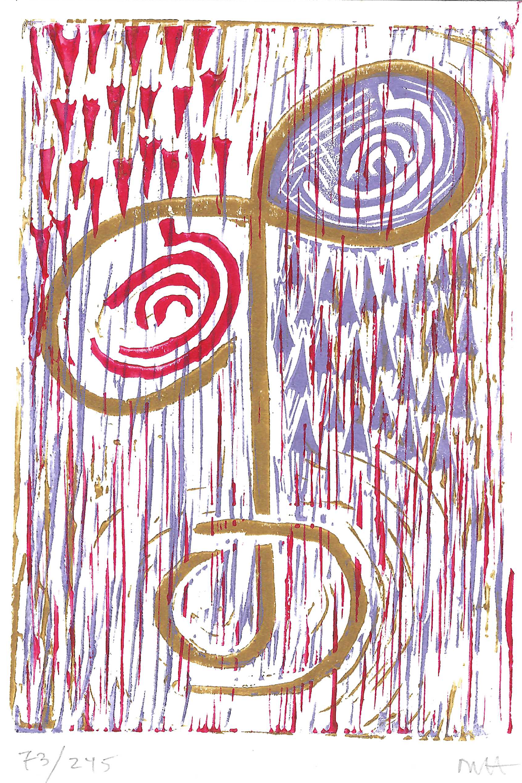
כף זכה
weighted to the positive
On this linoleum block print, the old-fashioned balance scale the word כף forms its shape. The pans of the scale hold positive and negative representations of the root of the word for innocence: זכה.
The constellation associated with the month of Tishrei (which begins on Rosh haShannah) is מאזנים, the balance scale. We are generally encouraged to achieve balance in our lives as the year begins.
It also suggests as R. Joshua ben Perahia said (Pirkei Avot 1:6): “Judge everyone with the scale weighted in their favor” (והוי דן את כל האדם לכף זכות). And, R. Abraham Joshua Heschel taught “When I was young I admired clever people. Now that I am old* I admire kind people.”
*“Old”? Heschel died at the age of 65!
Pirkei Avot 3.1 — 5783\2022 — May we use the knowledge of “from where we came”, and the tools we have to shape “where we are headed”… to build a world of inclusion & peace for all.
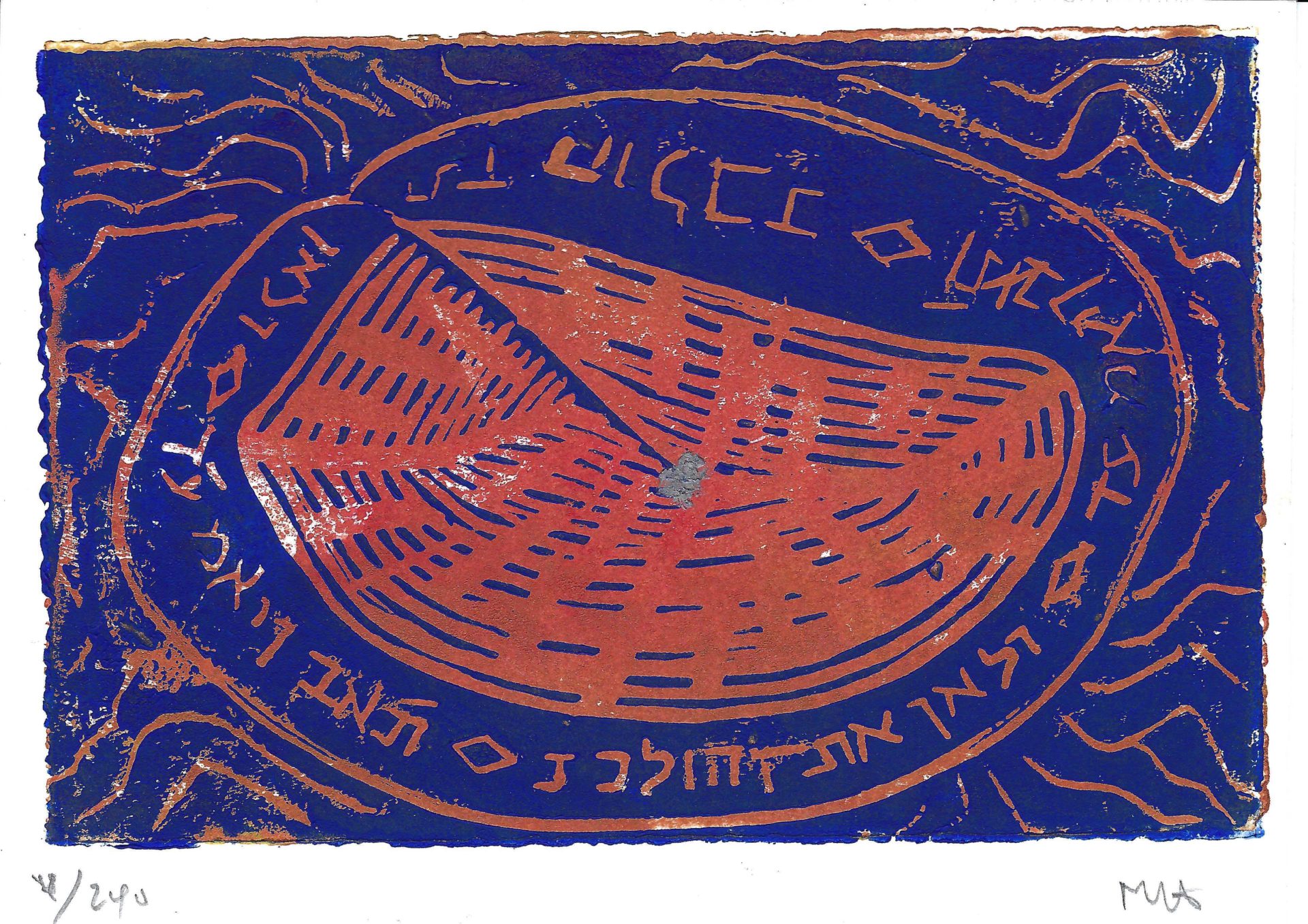
דַּע מֵאַיִן בָּאתָ, וּלְאָן אַתָּה הוֹלֵךְ
Know from where you come, and where you are going.
The people who fashioned the James Webb Space Telescope have enabled us to peer into the deepest past of the cosmos, presenting a richer understanding of our origins. Meanwhile, Michal Shomer, in Israel, has fashioned a font that enables us to read Hebrew in a multi-gendered manner offering us a chance to shape a richer, more inclusive future.
The image on this year’s card is an attempt to capture some of the glory of an early photograph from the telescope depicting a group of five galaxies, two of which are in the process of merging. It also uses the Multi-Gender Hebrew font laid out on a möbius strip with the first phrase דַּע מֵאַיִן בָּאתָ displayed as a mirror image so that the entire phrase reads continuously forward and back:

I imagine our task as constantly looking backward and forward as each phrase leads into the other.
Deuteronomy 20:19 — 5784\2023 — May we embrace the potential of each generation of seeds to transform the fields of our planet for good. May these seeds yield growth, blessing, repair, and peace.
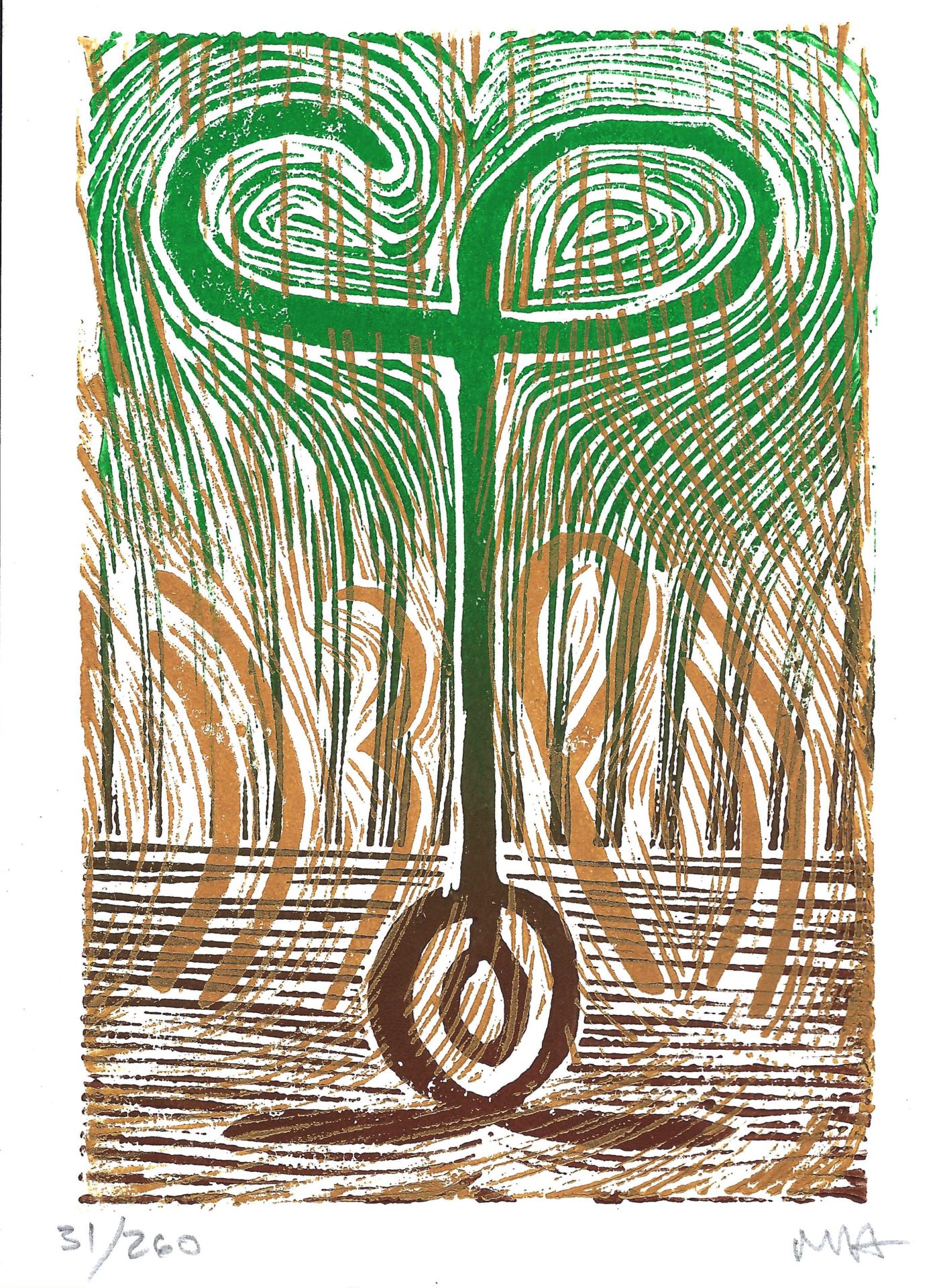
כִּ֤י הָֽאָדָם֙ עֵ֣ץ הַשָּׂדֶ֔ה
Are trees of the field human?
In this year’s card the Hebrew letters that spell tree: עץ (in script form, with the ע inverted) depict the tree. Similarly, the script of the letters that spell [grasses of] the field: השדה portray the field.
A contemporary view of this verse stresses the symbolic nature of trees: “the anthropomorphic form of trees, which like people have roots (feet), a trunk (body), branches (hands), twigs (fingers), and leaves (hair).” (Prof. Shai Secunda of Bard College)
This idea of humanizing trees is at the core of the poem by award-winning Israeli poet Natan Zach titled “Tree of the Field.” Written after the 1982 Israeli war with Lebanon and set to music by Shalom Chanoch, it became a national song of grief.
A number of renditions of the song are available on YouTube:
In preparing this year’s card, I extend this metaphor. As the tree symbolizes humans, the field represents our natural world, a symbiotic relationship.
Genesis 32:29 — 5785\2024 — May our struggles transform us and the world for growth, blessing, repair, and especially, for peace.

וַיֹּ֗אמֶר לֹ֤א יַעֲקֹב֙ יֵאָמֵ֥ר עוֹד֙ שִׁמְךָ֔ כִּ֖י אִם־יִשְׂרָאֵ֑ל
כִּֽי־שָׂרִ֧יתָ עִם־אֱלֹהִ֛ים וְעִם־אֲנָשִׁ֖ים וַתּוּכָֽל׃
Said he, “Your name shall no longer be Jacob, but Israel,
for you have striven with beings divine and human, and have prevailed.”
Returning to his birthplace in Canaan, Jacob encounters a being. He emerges transformed and renamed Israel, one who wrestles with the divine.
The two names form the image on this year’s card; one the mirror image of the other. They entwine in struggle and embrace.
…and a word from popular culture.
Psalm 97:11a — 5786\2025 — As we seek to tend to our world in righteousness, may the light sown within it shine within us as well.
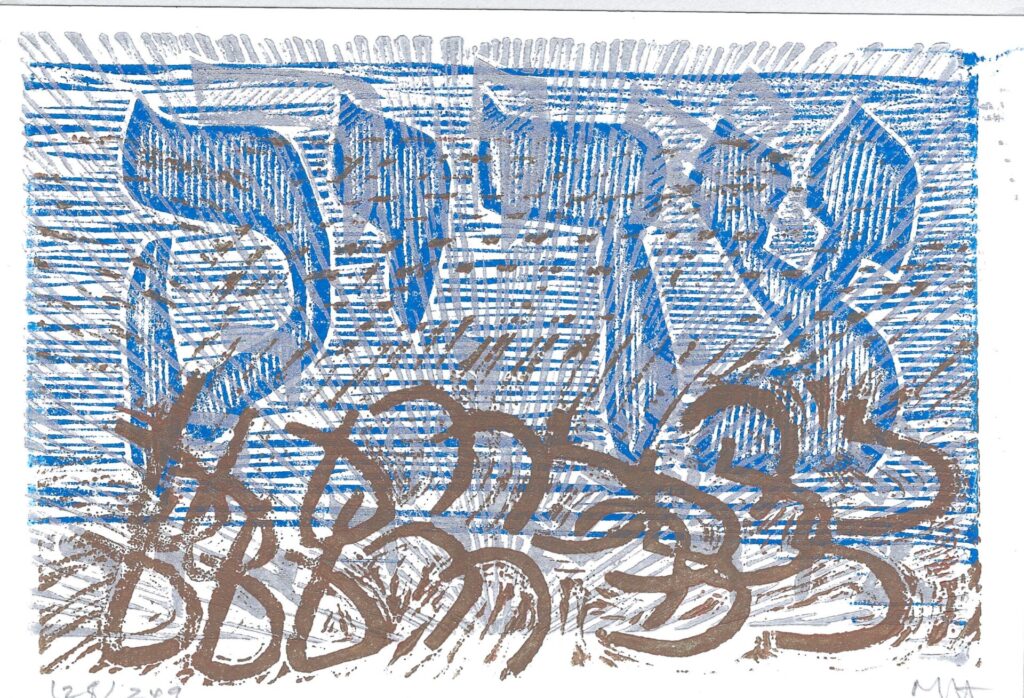
א֭וֹר זָרֻ֣עַ לַצַּדִּ֑יק
Light is sown for the righteous…
The image on this year’s card uses the first three words of Psalm 97:11 in three fonts and colors:
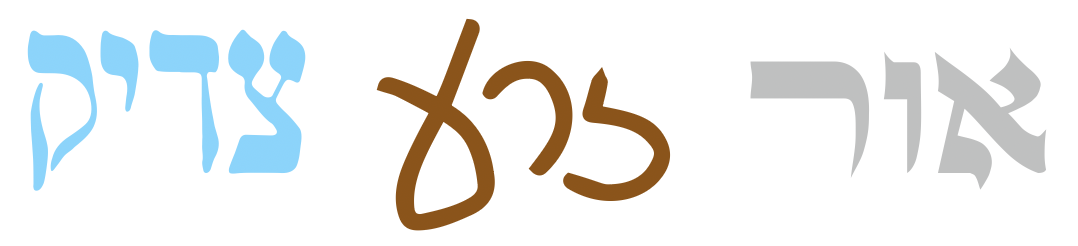
- אור — Light: uses silver in a font called Stam Ashkenaz CLM. [STaM (סת״ם)] is an acronym for: Sifrei Torah (ספרי תורה) Torah scrolls; Tefillin (תפילין) worn during prayer; Mezuzot (מזוזות) scrolls affixed to doorposts.]
- זרע — Sown like seeds buried in the earth: uses brown in a modern script font called Dana Yad AlefAlefAlef.
- צדיק- Righteous: uses blue in a traditional European font called Yiddishkeit AlefAlefAlef.
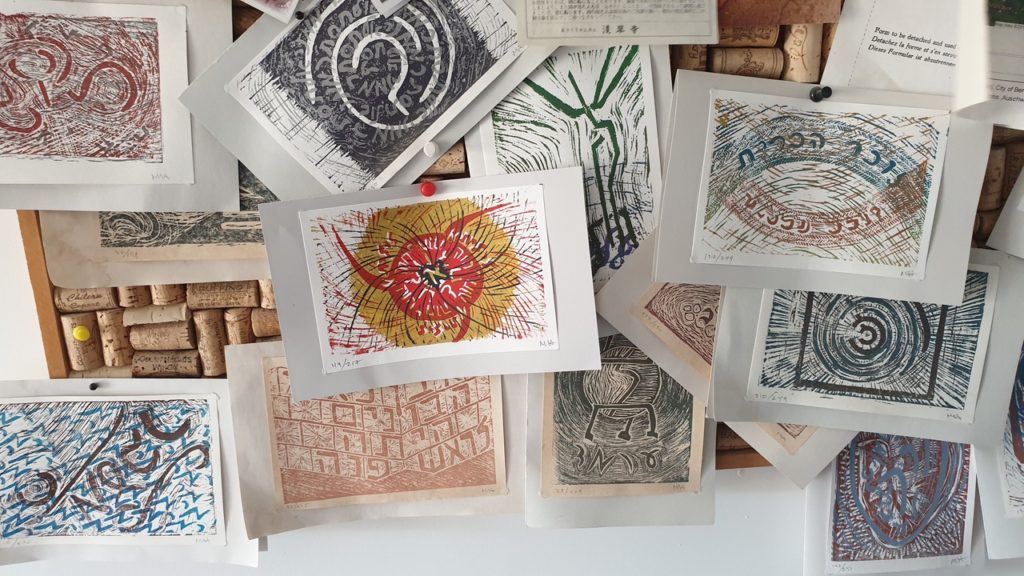
In 2020, someone in Israel to whom I mail hard copies of the card sent me a photo of a display of the many cards they’ve received. I like seeing them all together this way.

You can purchase reproductions of many of these cards for your own use at my Zazzle store.

©Mark Hurvitz
2021
last updated 2025