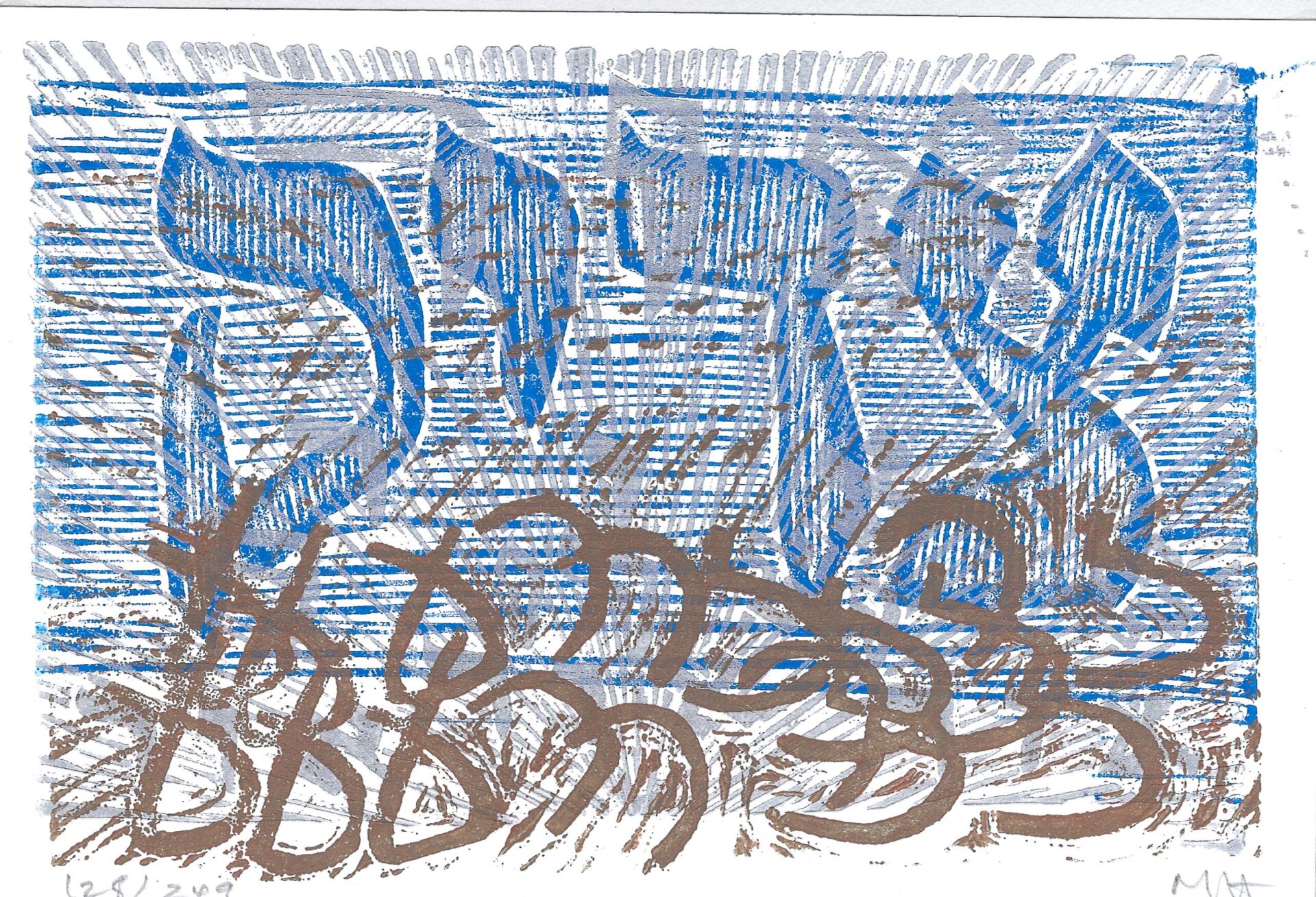
A friend called me the other day wondering why the Hebrew word ״מַכּוֹת״ in the phrase: “אֵלּוּ עֶשֶׂר מַכּוֹת שֶׁהֵבִיא הַקָּדוֹשׁ בָּרוּךְ הוּא עַל הַמִּצְרִים בְּמִצְרַיִם, וְאֵלּוּ הֵן:” is translated as “plagues”. He, an Israeli whose original language is Hebrew did not see why the direct translation of “strikes” (as in hitting someone, i.e. the Egyptian,) wasn’t used. Most of us are familiar with this meaning of the word מַכּוֹת from Chanukkah when we remember the deeds of Judah Maccabee, who struck the Hellenists on our behalf.
I told him that for at least 20 years I have been using “signs” as a more meaningful translation. Yes, the Egyptians were “hit” by the plagues, but that was not for punishment, for the sake of hurting. Rather, they should be seen as signs. You could say that these that they were similar to the way a parent might discipline a misbehaving child: not to bruise, but to stress that the child must change their behavior.
As I wrote in A Growing Haggadah:
The Signs
Pharaoh was unwilling to release his labor supply.
Pharaoh thought himself a god. He believed he could do whatever he wanted to with individuals or entire peoples. He needed to learn the difficult lesson: there exists a Source of Power beyond the self.
A series of signs appeared, transformations of the expected world the Egyptians had come to take for granted. Some of these signs altered the natural realm, others shifted social interactions. Our Biblical text and ancient rabbis expressed these signs as though they occurred on a plane beyond human involvement. Today, we understand that we need to take an active role in the world we encounter, and in our own transformation.
In either case, whether affected by humans, the divine or a combination, our redemption could not and did not take place without a struggle. Due to that struggle, and the resultant loss of life, we take drops from our full cups of wine—this, then, symbolizes the diminution of our joy.
Nonethelss, plagues are on everyone’s mind this year (in alphabetical order).
- ‘And you shall tell your children.’ This Passover more than ever. by Yossi Klein Halevi
- Celebrating Passover during a modern-day plague by Shai Held
- Celebrating Passover During Coronavirus? Try Adding these Special Items to Your Seder Plate. by Sharon Barr Skolnik
- Passover and the 10 plagues during a time of plague by Jennifer Moses
- Passover in the time of the plague by M. Evan Wolkenstein
- The 11th Plague? Passover in a Pandemic by The Forward Staff
- The Power of Passover During a Plague by Alana Newhouse
- ‘We need a Seder’: One family strives to celebrate Passover during a plague by Julie Zauzmer
There are plagues that afflict us as living creatures on a delicate and endangered biosphere. There are plagues that we experience in the world of politics. There are plagues that we encounter in our relationships. There are even ways in which we oppress ourselves. Some are systemic, some are personal.
Our ancestors experienced the plagues sent against the Egyptians. The Egyptian people ignored the signs. Our ancestors heeded the signs they saw about them in their day.
☞ How might we recognize these signs?
☞ How will we respond?
This button dates from 2014 and came in a packet of similar Passover-related buttons.
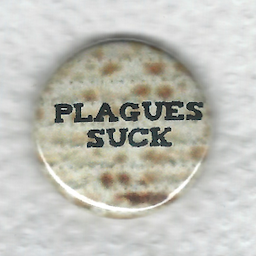
received from beavebuttons, made by Tevah and Jody Platt via etsy.com
| Date: | 2014 |
| Size: | 2.3 cm |
| Pin Form: | clasp |
| Print Method | celluloid |
| Text: | PLAGUES SUCK |
your lapel buttons
Many people have lapel buttons. They may be attached to a favorite hat or jacket you no longer wear, or they are poked into a cork-board on your wall or collected in a jar. If you have any lying around that you do not feel emotionally attached to, please let me know. I preserve these for the Jewish people. At some point, they will all go to an appropriate museum. You can see most of the buttons shared to date.