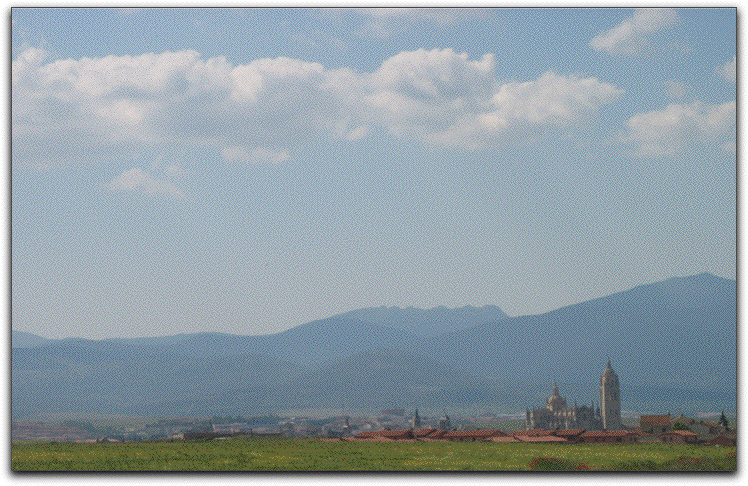
It is strange to be here in Spain in an area that was once rich in Jewish life and has now been without any Jews for over five hundred years.
We arrived in Segovia from the south and left to the north.
The old city is built in a valley, on a hill that drops of precipitously on all but its east side.
But from there you need to cross two rivers to get to it. The city dates, at least, from Roman times as is clear from the huge aqueduct that runs to it.
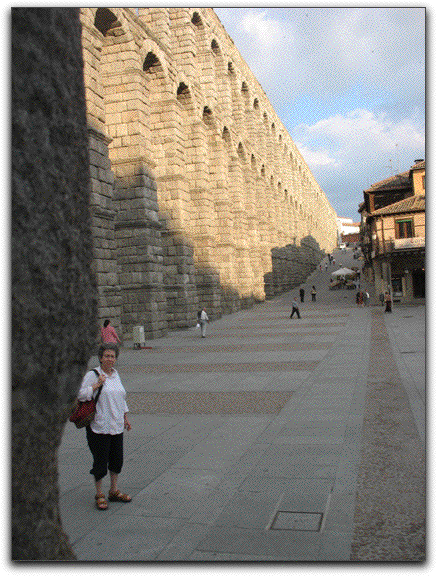
We entered the beautiful old city by foot and found the Tourist Info office where we picked up a brochure titled “A Visit to the Jewish Quarter of Segovia,” which includes a walking tour. We walked along Cervantes street following the map to the old Jewish quarter that hugs the southwest edge of the town. Along the way we saw a small monument in honor of those who fought in the Spanish Civil War.
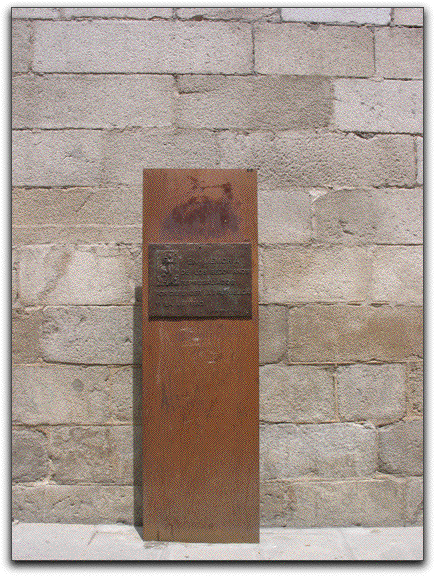
No much, but at least it’s something.
The old synagogue, Sinagoga Mayor, is now the Corpus Christi Church, but the best preserved of the once five synaogues. The Jewish area also contained a mikvah and a shochet.
As of November 2, 1412, the Jewish community, as well as the Muslim community, had to live within a walled area. While that was loosely adhered to, in 1480 the monarchs required the Jews to live in the Jewish Quarter defined by seven arches until the expulsion in 1492.
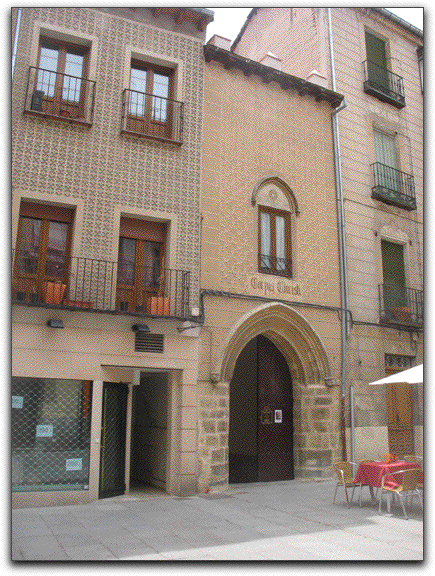
Down the road a bit is the house once owned by Abraham Senneor, who held the office of the Chief Justice of the Jewries of Castilla and the Landlord of royal Rents. He converted to Catholocism on July 15, 1492, at the monastery of Guadalupe along with his son in law, Mayor Melamed, who became known as Fernan Nunez Coronel. The Christening godparents were the monarchs. Thereafter Senneor’s name was Fernan Perez Coronel.
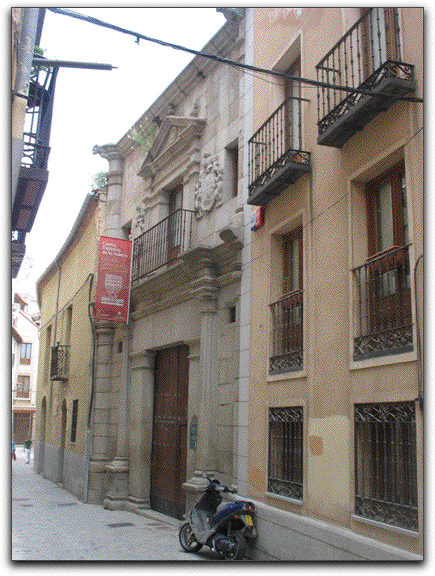
Senneor’s home now houses a museum and a little gift shop that deals in Judaica, much imported from Israel. We learned from the signs there that this museum is part of a network of Jewish educational institutions around Spain. And, the central office is in Zaragoza. We expect to be in Zaragoza as we near Belchite (in a couple of weeks), but we did not know that there would be anything there more than a campsite. We’ve written to the email address of the Jewish center, but have not yet received a response.
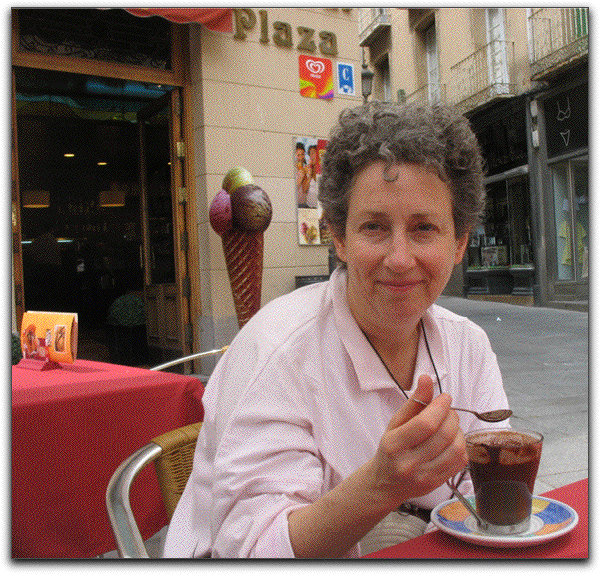
As happens all too often, our travels take time and we arrive at a town when everyone is off for siesta. Such was the case in Segovia. However we were able to take a break and enjoy some chocolate while we waited (in the little plaza across from the Sinagoga Mayor).
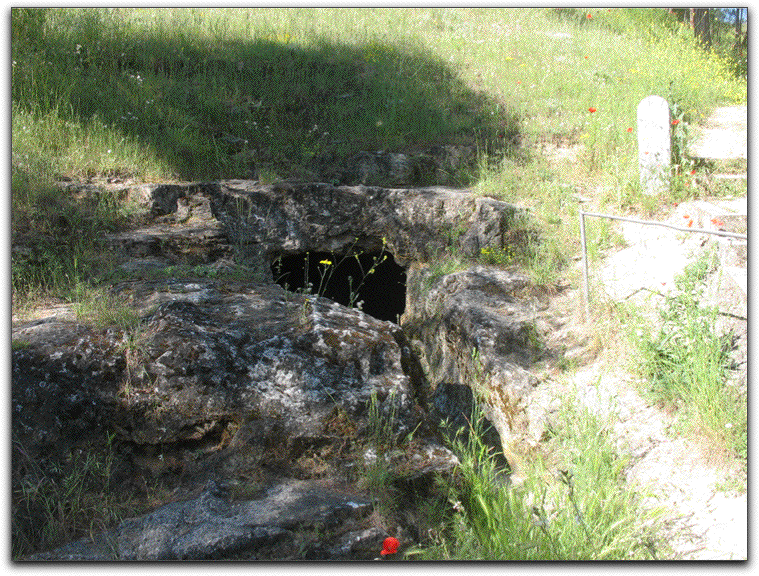
The next morning we swung around the south edge of town to take a closer look at the old Jewish cemetery. We found an open spot to park the van along the 2-lane road and climbed up a tiny narrow path to find empty open graves cut into the rock. That deep hole is one grave. These Jews buried both in the limestone caves and in these tombs. We saw friendly and helpful people walking their dogs through this area.
You can see how space for the head and shoulders are cut out of the rock in this grave. Some of the graves simply have trapeziodal spaces.
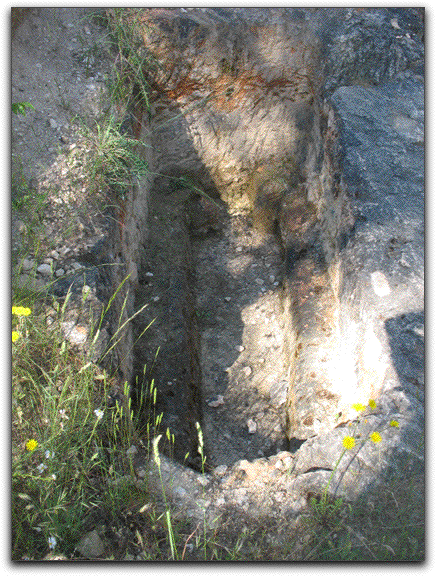
We’ve no idea when, or by whom the graves were dug up, nor to where the remains were taken.
As we left Segovia we saw many fields of one of Mark’s favorite flowers… the red anemone.
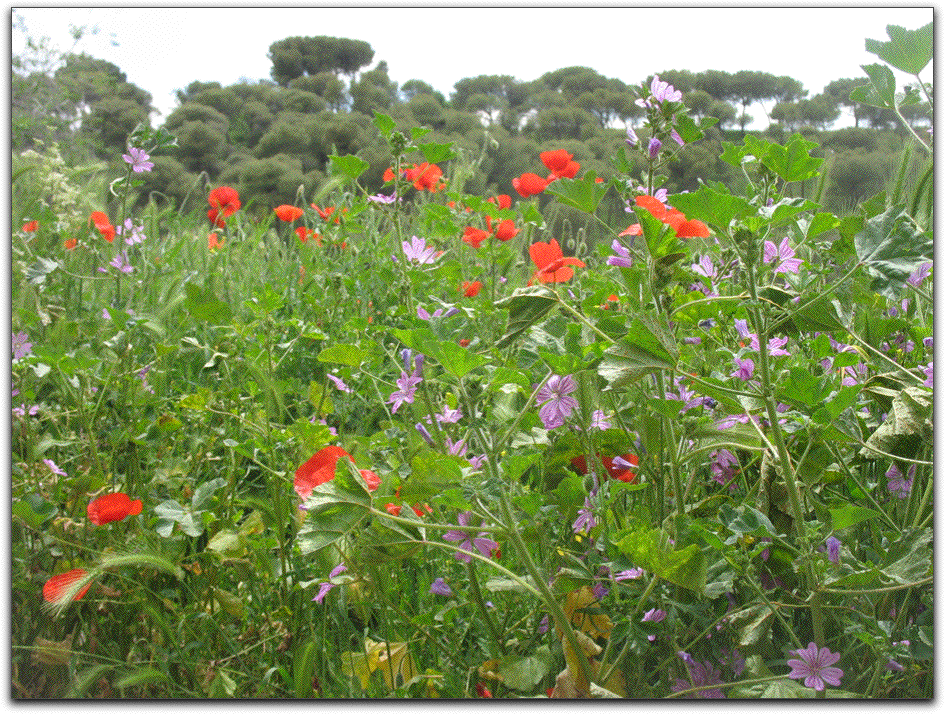
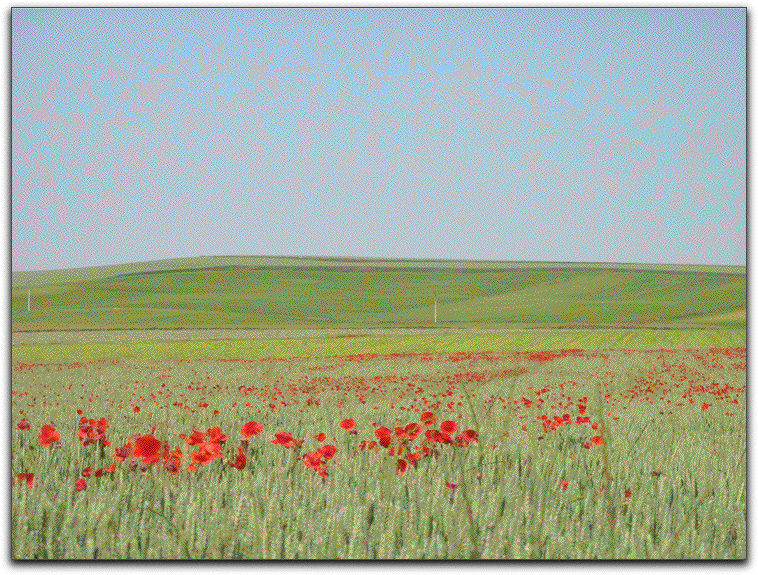
We headed north toward Amusco.
