[cross posted at the Jew and the Carrot].
At Pesach we drink a lot of wine. Why is it called the symbol of our joy?
In an arid environment, wine can be seen a method of preservation. If you do not live or work near a well or a spring or some other source of fresh water you need to have something else to drink during the day.
- Milk does not last without refrigeration; actually, we can think of cheese as a form of dried milk (that is a form of preserving milk).
- Crushing olives obtains oil, which while highly useful, does not quench thirst.
- Squashing pomegranates produces a very tart juice, but it doesn’t last long at room temperature.
- Squeezing dates creates a very sweet paste our ancestors called “dvash”.
- And figs don’t produce much in the manner of a drinkable juice either.
The Grape
But, that other fruit mentioned among the seven species, the grape, undergoes an amazing transformation when it is crushed, squashed and squeezed. With just the right amount of exposure to oxygen it becomes a drink that, like a good person, becomes more distinguished as it ages.
And so we Jews treat this juice with respect, initiating special moments of our lives and our experiences as a people by praising G!d for our ability to grow harvest and transform the grape into such a wondrous beverage.
One year I even made some of my own.
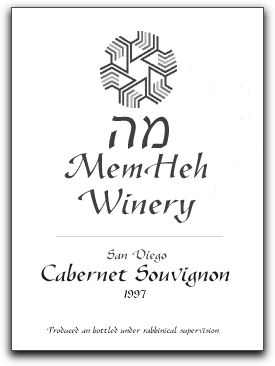
We express this awe in the words of the Kiddush. While the Kiddush differs slightly depending on the specific occasion, clearly the most frequently recited version is that sung on Shabbat. At that time we bring to mind the beginnings of creation and our role in it as well as our liberation from slavery in Egypt. Many of us know the melody composed by Lewis Lewandowski in the 19th century., but Jewish, liturgical, musical creativity has continued.
Mack the Knife sings Kiddush?
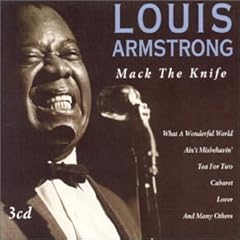


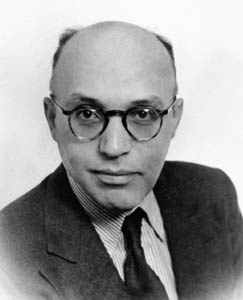
The 59th Yahrtzeit of Kurt Weill is soon upon us. Weill, the son of a Chazzan, died April 3, 1950 which corresponds to the second day of Pesach, or this year Friday April 10. Among the many wonderful works by Kurt Weill (who is best known for “Mack the Knife”) is a Kiddush.
[I paraphrase from the Jewish Heritage Online Magazine]:
Kiddush was commissioned in 1946 by the Park Avenue Synagogue in New York (at the time, Weill may have been living at 231 E. 62nd St.), where it was first performed by tenor solo, chorus, and organ, during a Friday night service by Cantor David Putterman. Weill dedicated the score to his father Albert, who survived the Second World War and became a citizen of the State of Israel.
I first heard this version of the Kiddush sung by my dear friend Cantor Richard Botton at Central Synagogue in Manhattan in the late 1970s and was deeply moved by its expressiveness. Cantor Botton later recorded the composition on Rockport Records [CD RR 5009] From Generation to Generation and I listen to it frequently.
When my wife, R. Deborah R. Prinz celebrated her retirement from the pulpit rabbinate at Temple Adat Shalom in Poway, CA (in 2007), I purchased the sheet music so that I could learn and sing the Kiddush (with a piano accompaniment) at the Erev Shabbat service honoring her. I continue to sing it often (a cappella with family accompaniment) at home on Erev Shabbat.
A recording is available on the Web, for those not familiar, sung by Cantor Garfein and choir (for some odd reason I can’t get it to play on my Mac now, and, if I remember correctly I did not find this a particularly moving rendition, though it ends with the sweetness it calls for).
Recently R. David Posner (Temple Emanu-El, NYC) spoke about Weill’s Kiddush on the radio show “Mad About Music” WNYC, (February 1, 2009). Here’s an excerpt from their conversation:
POSNER:
I do remember when I was younger, ten, eleven years old, I must have stopped by the time I was eleven years old, listening to Elvis Presley recordings, the Everly Brothers, I remember. I thought they were very good country singers. So I chose the Kurt Weill “Kiddush” because this is a jazz version of the “Kiddush”, which is the sanctification of God with the instrument of wine, praising God for being the creator of the fruit of the vine, and also thanking God for the Sabbath, on which this particular “Kiddush” is always recited, 52 weeks a year. Temple Emanu-El started to use this version of the “Kiddush” among maybe eight or ten that our Cantor does. And at first the congregation was somewhat uneasy, but after a half a dozen listenings, they were totally convinced and totally sold on a jazz version of the Kiddush, normally that they’ve always heard in chordal harmonies, very straight, and now with a fluidity that is so appealing and so mystical in its own way.
Wine, like freedom can lead to a powerful headiness
At the beginning of the Kiddush we praise G!d who enables us in our wonderful capacity for growing, harvesting and processing the fruit of the vine.
As I write in my own Haggadah:

Tonight we recline. Our reclining is not a sign of laziness, but of freedom, a respite as we await instructions on how to proceed. No one forces us to eat on the run, at our desks, or out in the fields at our work. We can enjoy a meal that includes conversation and song, a meal that focuses our attention on the burgeoning year as it blossoms around us and encourages renewed growth within us. Our meal also intensifies our awareness of the efforts for freedom still pursued by ourselves and others.
After drinking three of our four cups of wine, we also know that we have come most of the way from the degradation of slavery to the dignity of freedom. But freedom, like wine, can lead to a powerful headiness. Liberation itself is not the goal.
We have the strength to act according to our own decisions. Yet we understand that not every decision we make is the correct one, merely because it is ours. Though we can act out of strength, we have also learned that not by might, nor by power, but by the awesome divine attributes of justice and mercy will we all achieve wholeness.
Wine [Creation/Liberation]… and Song
And so, this year at Seder as we drink our last cup of wine, and on Shabbat when we make Kiddush, I hope we pause to become more aware of our strengths and abilities, consider different melodies that can carry our words, and rejoice in the creation and our liberation.